
Author
Aesop
- Lived
- Lived 620 BCE to 564 BCE
- From
- From Ancient Greek
- Born in
- Born in Thrace or Phrygia, by rival accounts
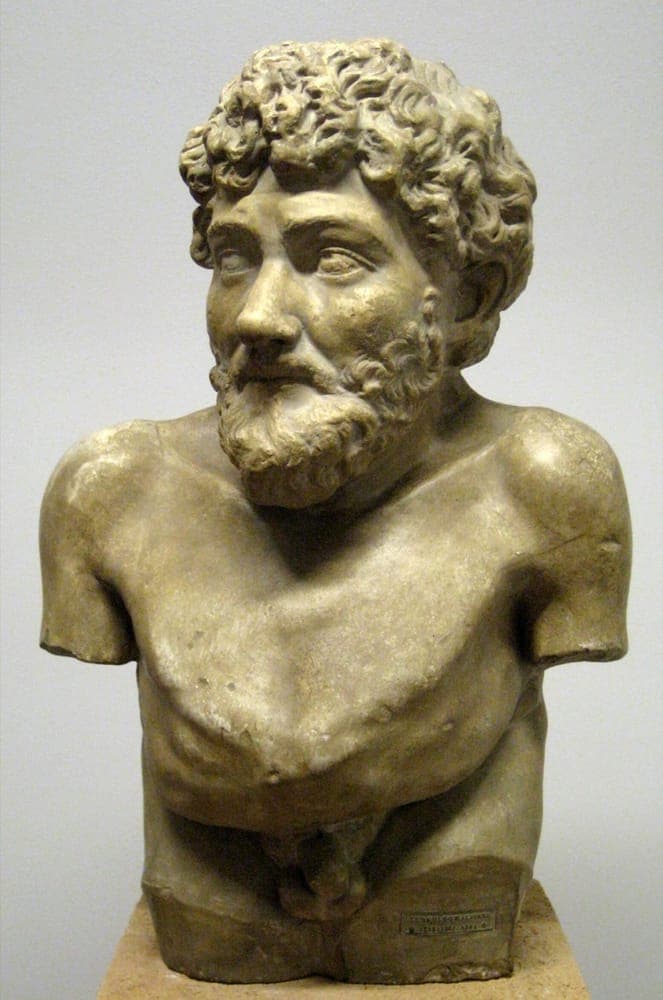
Aesop is less a documented life than a tradition assembled around a name, a Greek storyteller of the sixth century BCE whom later writers placed variously in Thrace, Phrygia, or the island of Samos. Herodotus, the earliest source to mention him, records that he was a slave who lived during the reign of King Amasis of Egypt, owned by a Samian master named Iadmon, and that he was killed at Delphi. Plutarch, Aristophanes, and the much later Life of Aesop expand the figure into a deformed, sharp-tongued bondsman who outwits philosophers and earns his freedom through cunning. He composed no book. The fables that bear his name, the tortoise and the hare, the fox and the grapes, the boy who cried wolf, the ant and the grasshopper, the dog in the manger, circulated orally for centuries before scholars began to write them down. Demetrius of Phalerum produced the first known collection around 300 BCE, now lost. The verse renderings of Phaedrus in Latin and Babrius in Greek, both from the Roman era, preserve the largest early bodies of the tradition. Each fable is brief, populated by talking animals, and closes on a moral, a form so durable that it gave its name to the genre. The Delphic priests, the legend holds, resented his mockery and threw him from a cliff after planting a stolen temple bowl in his luggage. A plague followed, read as punishment for the unjust death. Whatever the man was, the stories attributed to him became among the most widely translated and retold in the world, carried into nearly every language and taught to children across more than two and a half thousand years.
In the Life of Aesop, a Greek romance written centuries after him, his master Xanthus sends him to market for the best thing he can find. He comes back with tongues and serves nothing else. Sent the next day for the worst thing, he buys tongues again, and has the argument ready both times.
The first button needs the app on this device; the second gets it there.
In the canon
- Aesop's Fables560 BCE
- The Complete Fables550 BCE