
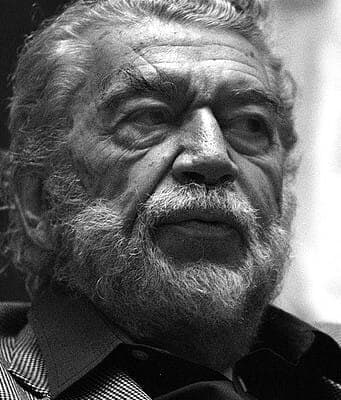
Author
Alain Robbe-Grillet
- Lived
- Lived 1922 to 2008
- From
- From French
- Born in
- Born in Brest, France
Alain Robbe-Grillet was born on August 18, 1922, in Brest, France, into a family of engineers and scientists. He trained as an agricultural engineer at the Institut National Agronomique in Paris, graduating in 1945, after spending 1943 and 1944 in Nuremberg as a conscripted machinist under the wartime forced-labor program. From 1948 to 1951 he worked as an agronomist for France's Institut des Fruits et Agrumes Coloniaux, studying tropical produce across Morocco, French Guinea, Guadeloupe, and Martinique. He fell seriously ill in the field and was repatriated to France, ending his scientific career for good. Recovering, he turned to writing, and in 1953 Les Éditions de Minuit published his first novel, The Erasers. He soon joined Minuit as its literary advisor, a post he held until 1985, championing new and difficult writers while publishing his own fiction. His second novel, The Voyeur, won the Prix des Critiques in 1955 despite a jury resignation and a hostile press that likened the book to the ravings of a madman. His 1957 novel Jealousy, narrated entirely through the eyes of an unnamed, suspicious husband watching his wife through a slatted window blind, became his most celebrated work and the clearest statement of his method: exhaustive, flat description standing in for psychology. He emerged as the leading theorist of the nouveau roman, or new novel, alongside Nathalie Sarraute, Michel Butor, and Claude Simon, and in 1963 published the movement's manifesto, For a New Novel. He also worked in film, writing Alain Resnais's Last Year at Marienbad, which won the Golden Lion at Venice in 1961, and later directing his own pictures, including Trans-Europ-Express and The Man Who Lies. He married Catherine Rstakian in 1957, and from 1963 the couple lived at the Château du Mesnil-au-Grain in Normandy. He taught for years as a visiting professor at New York University and, in 2004, was elected to the Académie française. He died in Caen on February 18, 2008, at eighty-five.
In 1951, three years into fieldwork for France's Colonial Fruit Institute across Morocco, Guinea, Guadeloupe and Martinique, Robbe-Grillet fell seriously ill and was repatriated. He never returned to agronomy. Recovering in France, he began writing his first novel, The Erasers, and left science behind for good.
The first button needs the app on this device; the second gets it there.
In the canon
- The Erasers1953
- Jealousy1957
- For a New Novel1963