
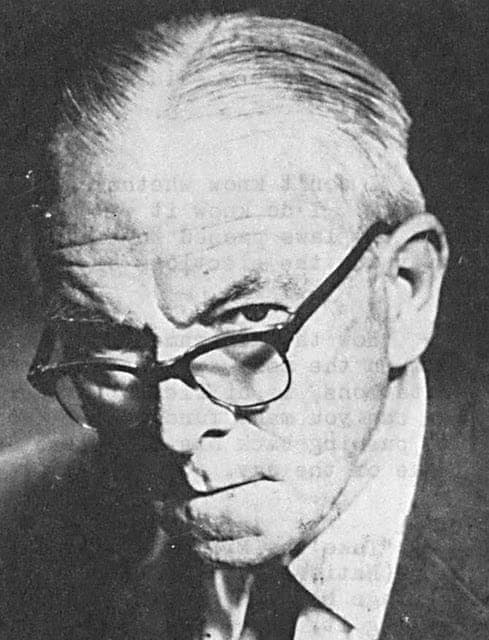
Author
Alan Paton
- Lived
- Lived 1903 to 1988
- From
- From South African
- Born in
- Born in Pietermaritzburg, South Africa
Born Alan Stewart Paton on January 11, 1903, in Pietermaritzburg in the Colony of Natal, the son of a civil servant of Christadelphian belief who beat his children, and an English-born mother whose compassion he credited as the source of his own, he attended Maritzburg College and took a Bachelor of Science from the University of Natal, then a diploma in education. He taught at Ixopo High School, in the green hills he would put into his most famous opening sentence. In 1935 he was appointed principal of Diepkloof Reformatory for young African offenders, where over the next fourteen years he replaced locked dormitories with open ones, instituted work permits and home visits, and watched fewer than five percent of the ten thousand boys he gave leave to fail to return. After the Second World War he toured correctional facilities in Scandinavia, Britain, and North America; he began writing Cry, the Beloved Country in a Norwegian hotel and finished it in San Francisco on Christmas Eve 1946. The novel was published by Scribner's in February 1948, edited by Maxwell Perkins, four months before the National Party came to power and apartheid was formally established. Paton helped found the Liberal Party of South Africa in 1953 and served as its president until the government dissolved the party in 1968. His passport was confiscated for ten years after he accepted the Freedom Award in New York in 1960. Too Late the Phalarope (1953) and Ah, but Your Land Is Beautiful (1981) followed, along with two volumes of autobiography. He died of throat cancer on April 12, 1988, at his home at Botha's Hill in Natal, aged eighty-five.
On the morning of 12 June 1964, Paton testified in mitigation of sentence at the Rivonia Trial, praising the sincerity of Mandela, Sisulu, and Mbeki under a hostile cross-examination from the prosecutor Percy Yutar. That same day, Judge de Wet sentenced all eight defendants to life imprisonment rather than death.
The first button needs the app on this device; the second gets it there.
In the canon
- Cry, the Beloved Country1948