
Author
Alejo Carpentier
- Lived
- Lived 1904 to 1980
- From
- From Cuban
- Born in
- Born in Lausanne, Switzerland
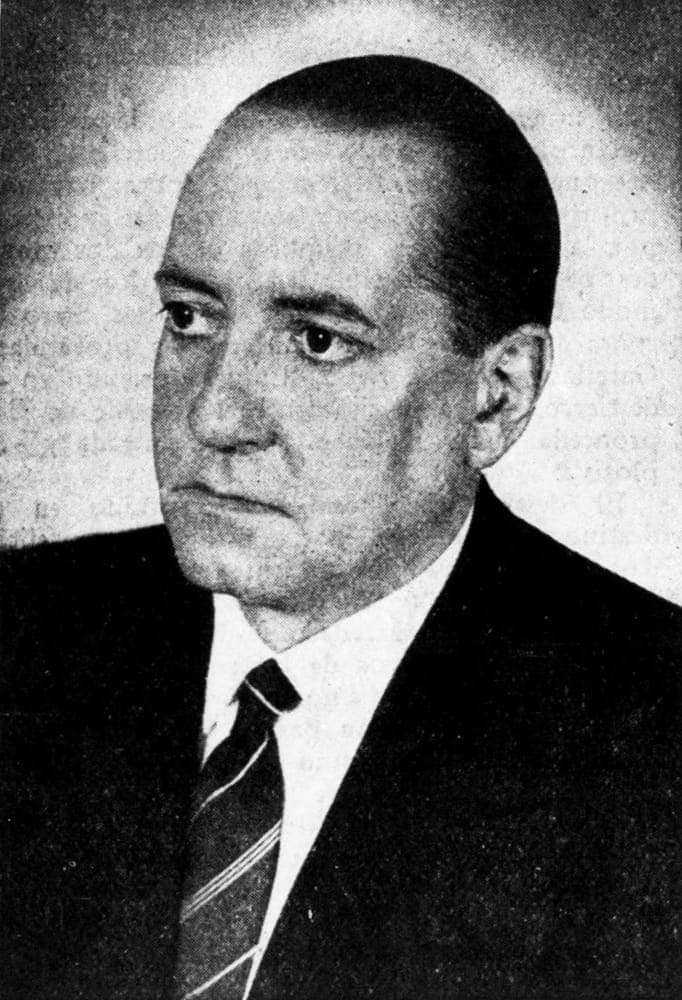
Born in Lausanne, Switzerland, on December 26, 1904, to a French architect father and a Russian language teacher, Carpentier was raised in Havana believing, like everyone else, that he had been born there; only after his death would his real birth certificate turn up in Switzerland. Asthma kept him indoors as a boy, reading through his father's library and playing Chopin on the piano from the age of seven. He began architecture studies at the University of Havana in 1921 but left to support his family, working as a journalist and, by his mid-twenties, editor of the magazine Carteles. His opposition to the dictator Gerardo Machado brought forty days in jail in 1927, where he began his first novel, Écue-Yamba-Ó. Released, he escaped Cuba in 1928 on a passport lent by the French poet Robert Desnos and spent eleven years in Paris, moving through Surrealist circles before souring on the movement's manufactured wonders. A 1943 trip to Haiti, standing among the ruins of the Sans-Souci palace, crystallized the idea that would define his fiction: lo real maravilloso, the claim that Latin America's own history was already marvelous enough without invention, set out in the prologue to The Kingdom of This World (1949). The Lost Steps (1953) and Explosion in a Cathedral (1962) followed, the latter said to have prompted Gabriel García Márquez to discard an early draft of One Hundred Years of Solitude and start again. Carpentier returned to Cuba for the 1959 revolution, served the new government as a cultural official, then moved back to Paris in the mid-1960s as Cuba's ambassador to France, a post he held until he died of cancer on April 24, 1980, shortly after finishing his final novel, an imagined deathbed confession by Christopher Columbus.
In 1928, fresh out of forty days in a Havana jail, Carpentier needed to vanish before Machado's police finished with him. The French poet Robert Desnos, a new friend from a congress of journalists, handed over his own passport and papers. Carpentier boarded a ship to France wearing another man's name.
The first button needs the app on this device; the second gets it there.
In the canon
- The Kingdom of This World1949
- The Lost Steps1953
- Explosion In A Cathedral1962
- Concierto Barroco1974