
Author
Alessandro Manzoni
- Lived
- Lived 1785 to 1873
- From
- From Italian
- Born in
- Born in Milan, Duchy of Milan
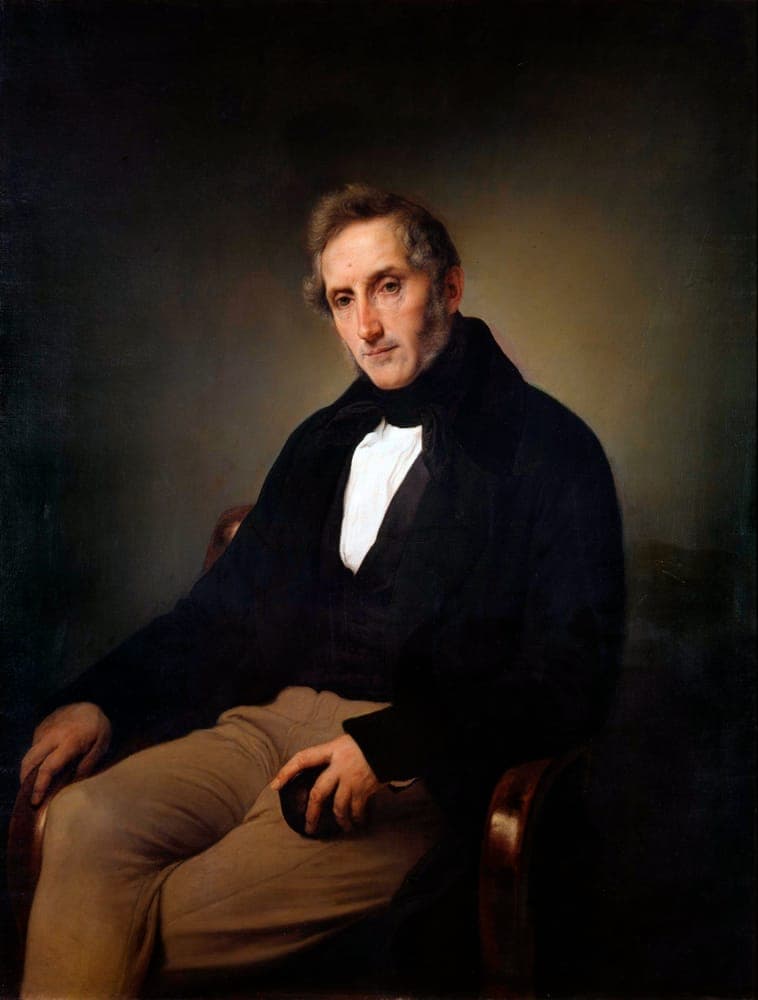
Born Alessandro Francesco Tommaso Antonio Manzoni on March 7, 1785, in Milan, then under Austrian rule, he was the legal son of Pietro Manzoni but almost certainly the biological son of Giovanni Verri, brother of the Enlightenment thinkers Pietro and Alessandro Verri. His mother, Giulia Beccaria, was the daughter of the great penal reformer Cesare Beccaria. When she abandoned the marriage in 1792 to live in Paris with the writer Carlo Imbonati, the six-year-old was packed off to a series of religious boarding schools run by the Somaschi and Barnabite fathers, where he developed the precocious literary appetite and the cool revolutionary atheism of his early manhood. His father's death in 1807 returned him to his mother's freethinking circle in Auteuil, where he met the Idéologues and the historian Augustin Thierry. The following year he married Henriette Blondel, a Genevese Calvinist whose conversion to Roman Catholicism in 1810 precipitated his own, and from that austere faith grew the Sacred Hymns, the tragedies Il Conte di Carmagnola (1820) and Adelchi (1822), and the great novel. The Betrothed (1827), set in seventeenth-century Lombardy during plague and famine, was rewritten over fifteen years in a deliberately purified Florentine Tuscan, supplying the new Italy with a national prose. Garibaldi visited him; Giuseppe Verdi composed the Requiem in his memory. He outlived eight of his ten children. He died on May 22, 1873, at the age of eighty-eight, after a fall on the steps of San Fedele in Milan that fractured his skull, and was given a state funeral, with the entire city in attendance.
In 1827, unsatisfied with his own Lombard-flavored prose, Manzoni moved his whole household, six children included, to Florence for five weeks, filling notebooks with the spoken Tuscan of washerwomen and street vendors. He called it rinsing his clothes in the Arno. The purified text took another thirteen years to finish.
The first button needs the app on this device; the second gets it there.
In the canon
- The Betrothed1827