
Author
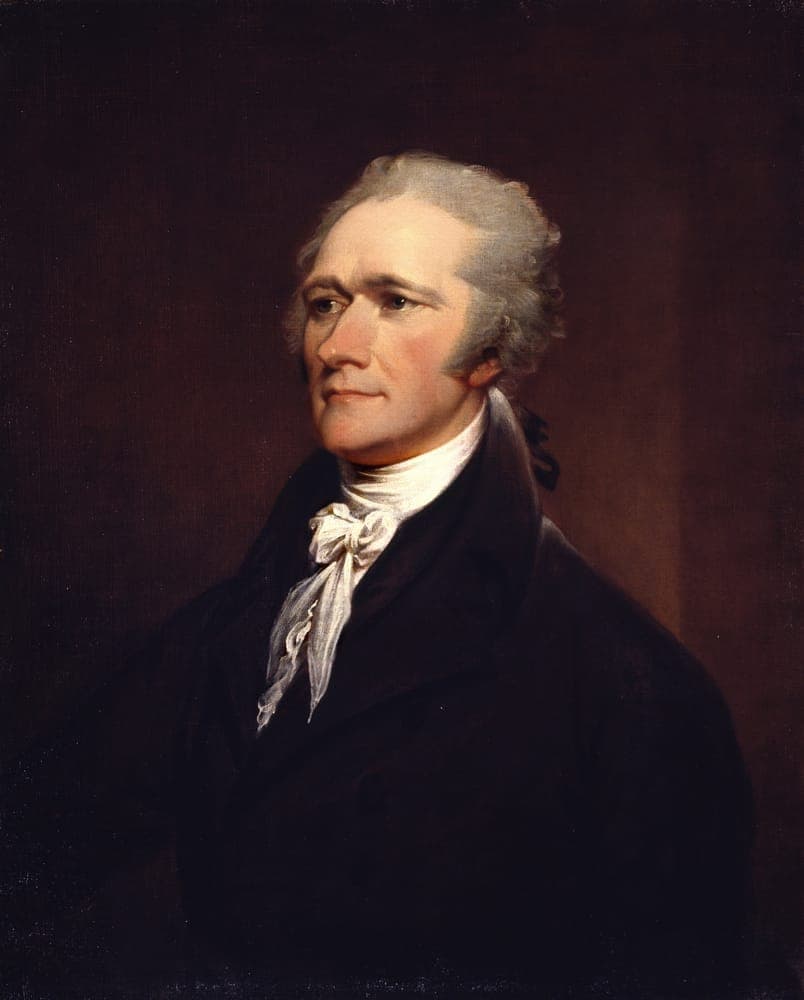
Alexander Hamilton
- Lived
- Lived 1755 to 1804
- From
- From American
Born on January 11, in either 1755 or 1757, in Charlestown on the British Caribbean island of Nevis, out of wedlock to Rachel Faucette Lavien, a married woman of half-British, half-Huguenot descent, and the Scotsman James Hamilton, fourth son of a minor laird, Alexander grew up under the shadow of legal illegitimacy. His father walked out when he was around ten; his mother died of yellow fever in 1768, leaving him orphaned with a brother and a family library of thirty-four books. A clerkship at the trading house of Beekman and Cruger in Saint Croix taught him commerce. A hurricane essay he wrote at sixteen so impressed the island that local subscribers paid to send him to school in New York. At King's College, the future Columbia, he became an anonymous pamphleteer for the Revolution. He fought as an artillery captain at the New York and New Jersey battles, served four years as aide-de-camp to Washington, and led an assault on Redoubt Number Ten at Yorktown. Afterward he founded the Bank of New York, sat in the Confederation Congress, and led the call for the Philadelphia Convention. With James Madison and John Jay he wrote The Federalist Papers under the name Publius in 1787 and 1788; of the eighty-five essays, fifty-one were his. As first Secretary of the Treasury from 1789 to 1795 under Washington he built the new republic's credit system. He drafted Haiti's constitution in 1801. Shot by Vice President Aaron Burr in a duel at Weehawken, New Jersey, on the morning of July 11, 1804, he was carried back across the Hudson and died the following afternoon in Greenwich Village, aged about forty-nine.
The first button needs the app on this device; the second gets it there.