
Author
André Breton
- Lived
- Lived 1896 to 1966
- From
- From French
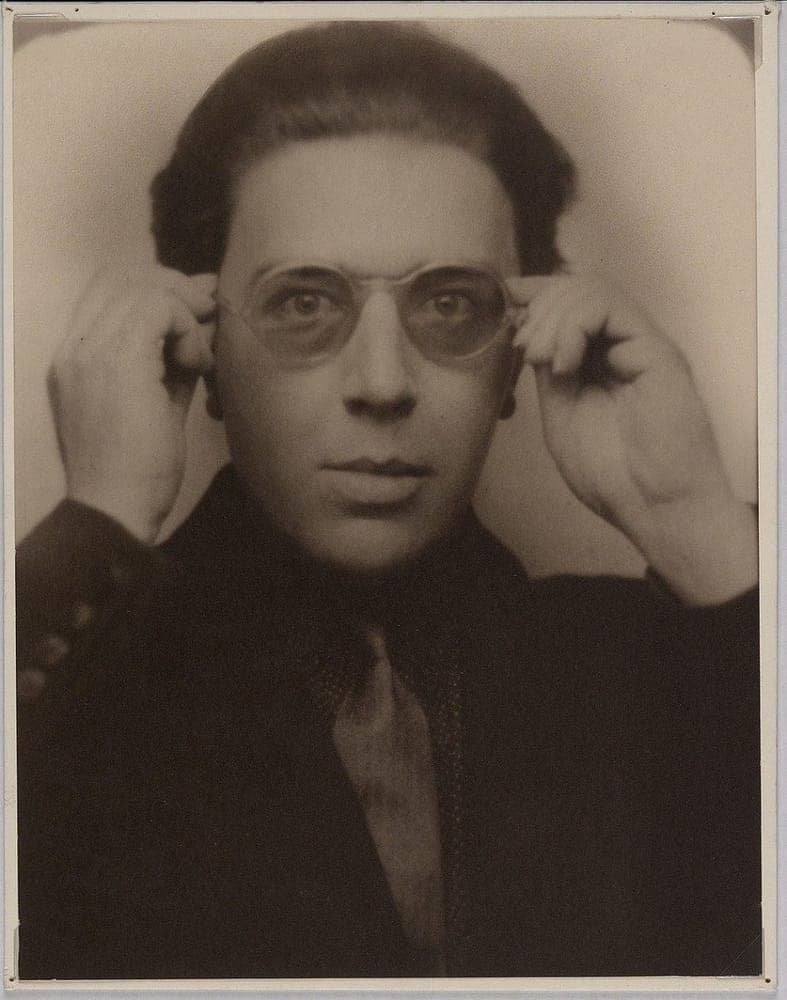
Born André Robert Breton on February 19, 1896, in Tinchebray in the Orne, Normandy, the only son of a policeman of atheist convictions and a former seamstress, he was sent to medical school in Paris with a particular fascination for mental illness. The First World War interrupted his studies. He was posted as an orderly to a neurological ward in Nantes, where he met the Jarry devotee Jacques Vaché, whose nihilist disdain for art and suicide at twenty-three at the war's end would shape him for life. He came home steeped in Freud, Lautréamont, and Rimbaud, and in 1919 founded the review Littérature with Louis Aragon and Philippe Soupault. Les Champs Magnétiques (1920), written with Soupault by the technique of automatic writing, opened the territory. The first Surrealist Manifesto (1924) declared the new project: pure psychic automatism, by which the writer transcribes the unmediated thought of the unconscious. Around him gathered Éluard, Crevel, Desnos, Péret, Aragon, Artaud, Leiris. He joined the French Communist Party in 1927, was expelled in 1933, and waged a doctrinal civil war within his own movement against any defector who softened the line. Nadja (1928) recorded his Paris walks with a young woman whose mind was breaking, illustrated with photographs of the streets she haunted. He fled the Nazis in 1941 with the help of Varian Fry and spent the war in New York, refusing to learn English on principle. Arcane 17 (1944) was written in Quebec. He returned to Paris in 1946 and held court at the Café de la Place Blanche until his death there on September 28, 1966, aged seventy.
The first button needs the app on this device; the second gets it there.
In the canon
- Surrealist Manifesto1924
- Nadja1928
- Arcanum 171944