
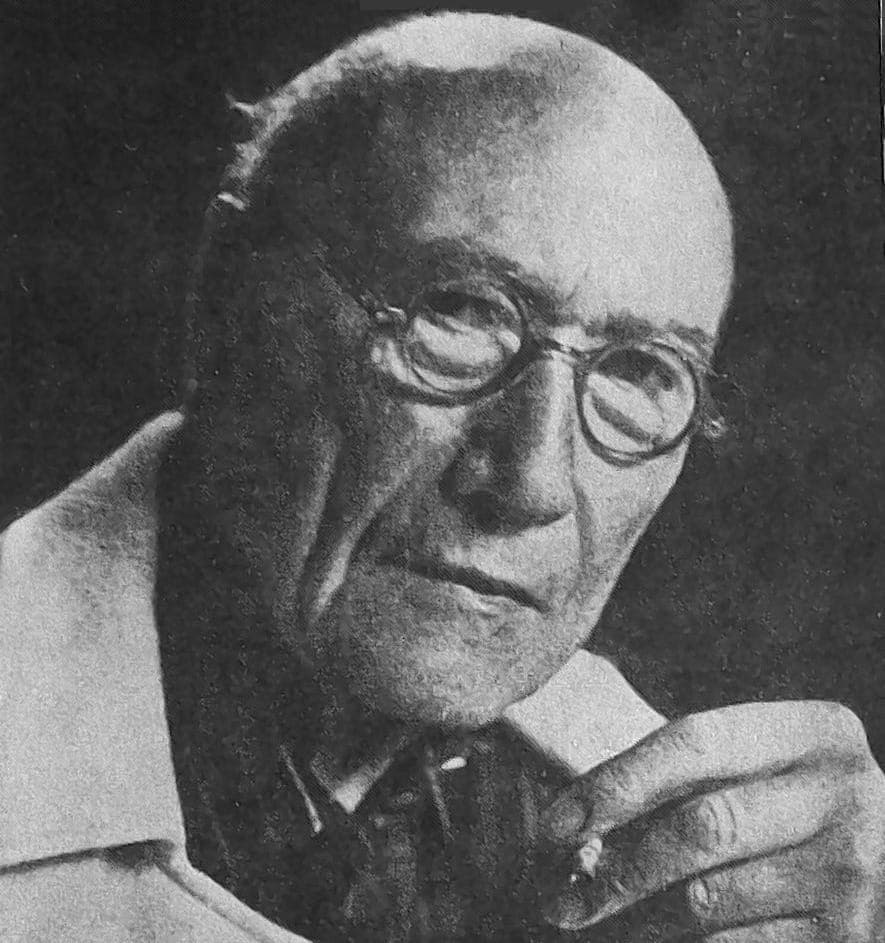
Author
André Gide
- Lived
- Lived 1869 to 1951
- From
- From French
- Born in
- Born in Paris, France
Born André Paul Guillaume Gide on November 22, 1869, in Paris into a strict Huguenot family, the only child of a law professor at the Sorbonne who died when he was eleven, he grew up under his pious mother in isolated conditions in Normandy, schooled fitfully by tutors and devoured by religious scruple. He published his first book, The Notebooks of André Walter, at twenty-one, then in 1893 set out for North Africa with a tubercular cough; in the dunes outside Sousse he came to accept his homosexuality, an experience that would split his life between Protestant austerity and a slow careful claiming of his own nature. In 1895 he married his cousin Madeleine Rondeaux in an unconsummated union that lasted forty-three years, and in 1908 helped found the Nouvelle Revue Française, the most consequential literary review in modern France. The Immoralist (1902), Strait Is the Gate (1909), The Vatican Cellars (1914), and the great formal experiment The Counterfeiters (1925) traced the dialectic he could never resolve, between the call of the self and the law of the family. His journey through French Equatorial Africa in 1926 produced Travels in the Congo, a denunciation of colonial concession companies that prompted real reform. Briefly a Communist fellow traveller, he broke with the Soviet Union after a 1936 visit and published Return from the USSR. The Vatican placed his complete works on the Index in 1952. He won the Nobel Prize in Literature in 1947. He died on February 19, 1951, in Paris at the age of eighty-one, of pneumonia, with a last sentence dictated to his daughter Catherine: the line is always between the two.
In 1918, while Gide was away, Madeleine burned every letter he had written her since childhood, some two thousand pages across thirty years. He came home to find them gone and wept for a week, waiting for her to comfort him. She went about her chores and said nothing. He called himself ruined.
I'm afraid my sentences will become grammatically incorrect. It's always the struggle between the reasonable and what is not.
The first button needs the app on this device; the second gets it there.
In the canon
- The Fruits of the Earth1897
- The Immoralist1902
- Strait is the Gate1909
- The Vatican Cellars1914
- The Counterfeiters1925
- Journals1948