
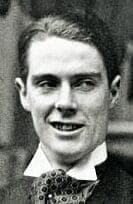
Author
Anthony Powell
- Lived
- Lived 1905 to 2000
- From
- From British
- Born in
- Born in Westminster, London
Born Anthony Dymoke Powell on 21 December 1905 in Westminster, he was the only child of Lieutenant-Colonel Philip Powell of the Welch Regiment and Maud Wells-Dymoke, whose family had been hereditary Champions to English monarchs since the reign of Richard II. The regiment's moves and the First World War sent mother and son around Britain, often apart from his father, and Powell developed an early interest in genealogy that would stay with him for life. At Eton he befriended the future novelist Henry Yorke (Henry Green) and joined the Eton Society of Arts; at Balliol College, Oxford, he came down with a third-class degree and a circle that included Evelyn Waugh. He worked as a publisher at Duckworth in Covent Garden and reviewed fiction for the Daily Telegraph for thirty-two years, leaving the paper only after Auberon Waugh attacked him in its pages. Five novels in the 1930s, beginning with Afternoon Men (1931), preceded wartime service with the Welch Regiment and Intelligence Corps, where he handled liaison with the Czech, Belgian, and French armies in exile, work that earned him the Order of the White Lion and the Order of Leopold II. He then began A Dance to the Music of Time, twelve novels named after the Poussin painting in the Wallace Collection and published one volume at a time from 1951 to 1975, following his narrator Nicholas Jenkins through fifty years of English upper-class and bohemian life. The fourth volume, At Lady Molly's, won the James Tait Black Memorial Prize in 1957. He helped organise George Orwell's funeral in 1950. Declining a knighthood in 1973, he died at The Chantry in Somerset on 28 March 2000, aged ninety-four.
In 1943, on a nine-week Cabinet Office attachment, Powell served under Denis Capel-Dunn, a colonel so fat, humourless, and nakedly ambitious that fellow club members nicknamed him Young Bloody. Capel-Dunn refused to extend the posting. Asked years later if Capel-Dunn had inspired Kenneth Widmerpool, Powell would only allow that the historian proposing it was 'on to something there.'
The first button needs the app on this device; the second gets it there.
In the canon
- Afternoon Men1931
- A Dance to the Music of Time1951
- The Valley Of Bones1964
- The Soldier's Art1966
- The Military Philosophers1968