
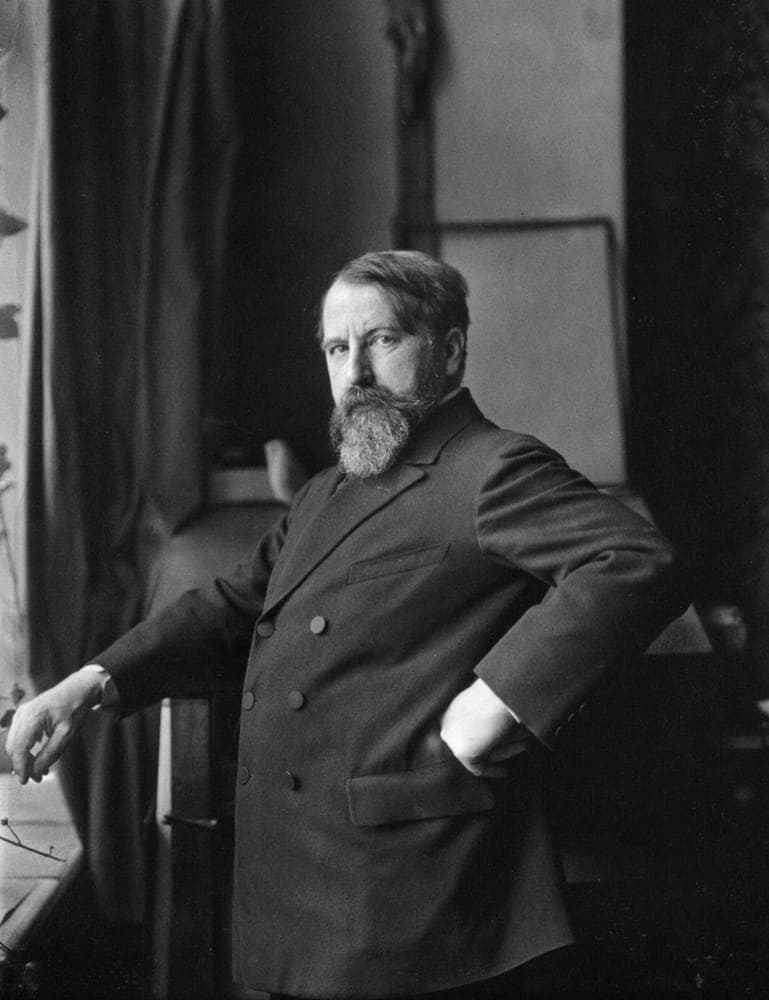
Author
Arthur Schnitzler
- Lived
- Lived 1862 to 1931
- From
- From Austrian
- Born in
- Born in Vienna, Austrian Empire
Born Arthur Schnitzler on May 15, 1862, in Vienna's Leopoldstadt district, the eldest son of Johann Schnitzler, a prominent laryngologist to the city's actors and singers, and Luise Markbreiter, daughter of a Viennese physician. Raised in an assimilated Jewish household steeped in music and theater, he followed his father into medicine, earning his doctorate from the University of Vienna in 1885 and working for years at the General Hospital, where he researched hypnosis and psychotherapy before Freud's theories were widely known. He wrote constantly alongside his medical practice, and by the early 1890s had joined Jung-Wien, the loose circle of Viennese modernists that included Hugo von Hofmannsthal and Hermann Bahr, gathering at the Cafe Griensteidl to argue over the new literature of the inner life. His 1900 novella Lieutenant Gustl, narrated entirely inside a young officer's head across one sleepless night, scandalized the Austro-Hungarian army and cost him his own reserve commission, while establishing the sustained interior monologue in German fiction. Der Weg ins Freie (1908) turned his psychological method on Vienna's Jewish intelligentsia, weighing assimilation against Zionism as antisemitism hardened around them. His play Reigen, written in the 1890s and printed privately in 1900, was so incendiary that its delayed 1920 Berlin premiere triggered riots, an obscenity trial, and his own decision to ban further performances until after his death. He married the actress Olga Gussmann in 1903; their son Heinrich became a theater director, and their daughter Lili took her own life in Venice in 1928, a loss from which he never recovered. He kept writing to the end, publishing the novel Flucht in die Finsternis in 1931. Schnitzler died of a cerebral hemorrhage in Vienna on October 21, 1931, at sixty-nine, less than two years before the Nazis burned his books in the streets of Berlin.
In July 1928, a telegram reached Schnitzler in Vienna: his daughter Lili, married and living in Venice, was gravely ill and wanted him away. He and his wife Olga flew to her bedside a day later, only to learn she had shot herself. She died that evening, at eighteen, and was buried in Venice.
The first button needs the app on this device; the second gets it there.
In the canon
- None but the Brave1895
- Lieutenant Gustl1900
- The Road Into The Open1908