
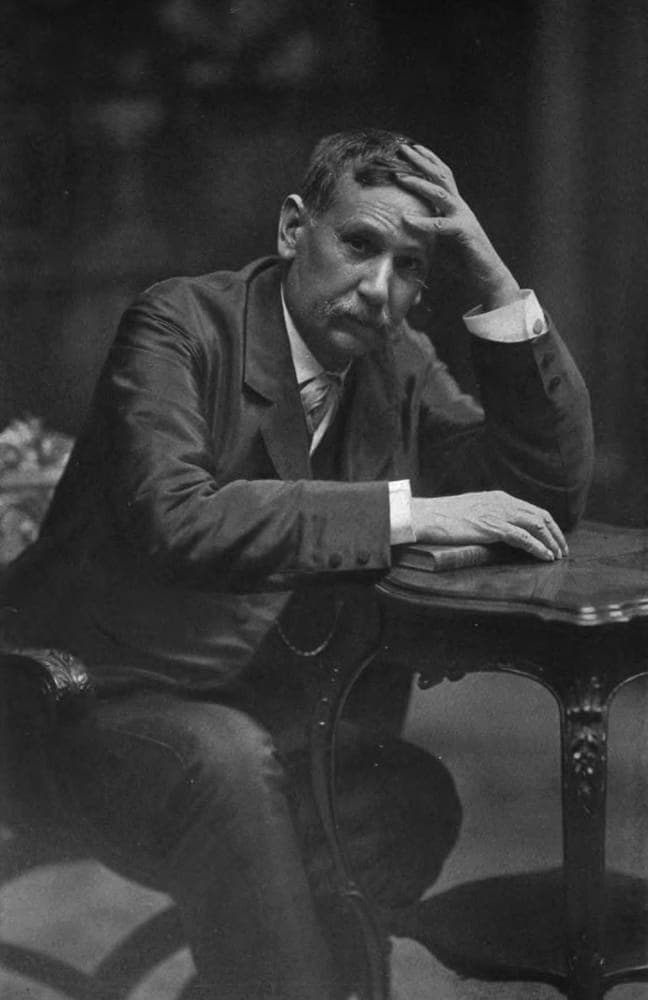
Author
Benito Pérez Galdós
- Lived
- Lived 1843 to 1920
- From
- From Spanish
- Born in
- Born in Las Palmas de Gran Canaria, Spain
Born on May 10, 1843, on Calle Cano in Las Palmas de Gran Canaria, the tenth and youngest child of a colonial lieutenant colonel and his strict Basque-descended wife, Benito Pérez Galdós was raised in the Atlantic provincial capital and taught by masters trained in the Spanish enlightenment. After matriculating in Tenerife in 1862 he was sent to Madrid to read law, abandoned the course, and gave himself instead to the cafés of the Ateneo, where he watched the political upheavals of the 1860s become material. His first novel, La Fontana de Oro (1870), set in the Liberal Triennium half a century earlier, opened a long study of nineteenth-century Spain. The Episodios Nacionales, begun in 1873, eventually ran to forty-six historical novels across five series, narrating Spanish life from Trafalgar to the Restoration. Among the contemporary novels, Fortunata and Jacinta (1887) tracks two women, a working-class beauty and a bourgeois wife, both bound to the same weak-willed young man in the Madrid of the 1870s, and stands beside Middlemarch and Anna Karenina as a great novel of marriage and political ferment. He wrote in pencil from dawn until ten, walked the city listening for fragments of speech, smoked leaf cigars, and never married, although he fathered a daughter and conducted long affairs, including one with Emilia Pardo Bazán. He sat in the Cortes for several constituencies, joined the Republican-Socialist Conjunction late in life, and was blocked from the 1912 Nobel by Catholic opposition. Blind by his last years, he died in Madrid on January 4, 1920, at seventy-six, and was followed to the cemetery by some thirty thousand mourners.
In January 1919, months before his death, Madrid unveiled a marble statue of Galdós in the Retiro. Blind by then, he was led to the stone and ran his hands over its face, tracing the nose, the moustache, the sightless eyes. "Magnificent, friend Macho," he told the sculptor. "And how it resembles me."
The first button needs the app on this device; the second gets it there.
In the canon
- National Episodes1873
- Fortunata and Jacinta1887
- Compassion1897