
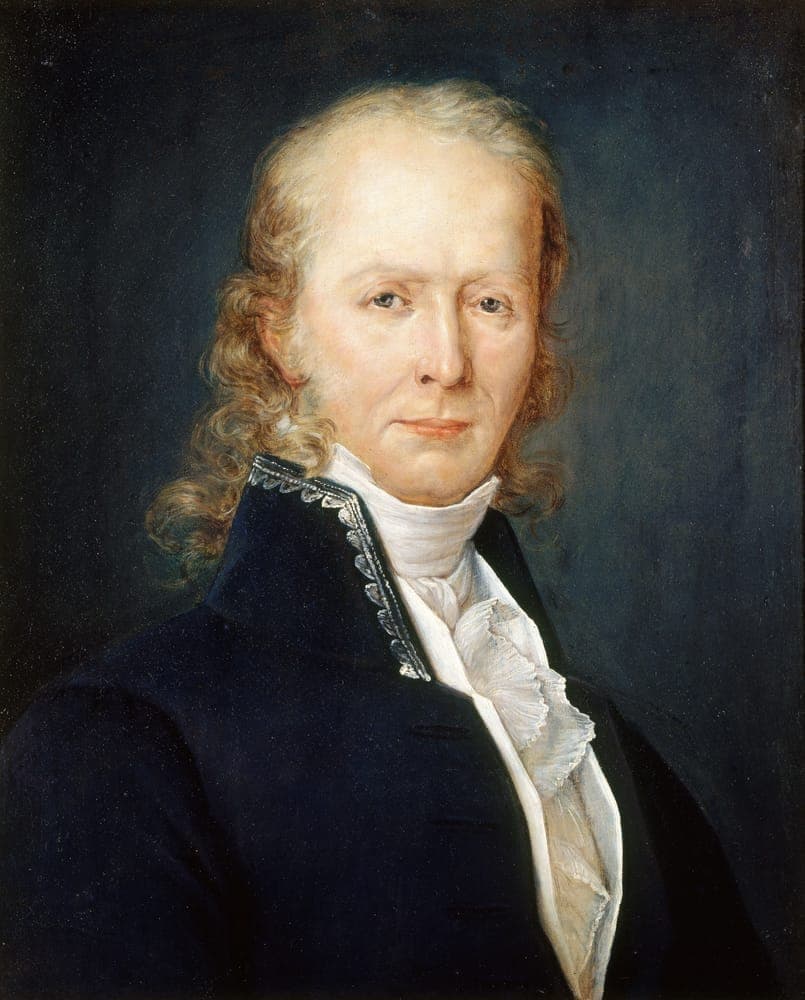
Author
Benjamin Constant
- Lived
- Lived 1767 to 1830
- From
- From Swiss-French
- Born in
- Born in Lausanne, Switzerland
Born Henri-Benjamin Constant de Rebecque on October 25, 1767, in Lausanne, in the Swiss canton of Vaud, he lost his mother days after his birth and was raised by a string of tutors and an emotionally distant father, an officer in the Dutch army. He studied at the University of Erlangen and the University of Edinburgh, where he ran up gambling debts that would recur throughout his life, before drifting into Parisian and German literary society. In 1794 he met Germaine de Staël, and the fifteen years that followed, an intellectual partnership as much as a love affair, shaped both his politics and his fiction; their daughter Albertine was born in 1797. Constant served in Napoleon's Tribunat until his expulsion in 1802 for opposing the consolidation of Napoleon's power, then spent the Empire years largely abroad, at Staël's estate at Coppet or in Weimar, where he came to know Goethe. In 1808 he secretly married Charlotte von Hardenberg, keeping the marriage from Staël for nearly a year. In March 1815, days before Napoleon's return from Elba reached Paris, Constant denounced him in print as a latter-day Attila; weeks later he was drafting a liberalized constitution for that same emperor, the Acte additionnel, a reversal Parisians mocked by nicknaming the document la Benjamine. The following year he published Adolphe, a spare account of a love affair curdling into obligation that readers immediately read as a portrait of his years with Staël, a resemblance he publicly denied. Elected to the Chamber of Deputies in 1819, he became one of the era's most formidable liberal orators, delivering his landmark address distinguishing the liberty of the ancients from the liberty of the moderns, and he held his seat until his death. He died in Paris on December 8, 1830, at sixty-three; at his funeral, students unharnessed the horses from his hearse and pulled it themselves to Père Lachaise.
On March 19, 1815, the day before Napoleon reached Paris from Elba, Constant published an article in the Journal des débats denouncing him as a latter-day Attila. Within weeks he was drafting a new constitution for that same emperor, the Acte additionnel. Parisians nicknamed it la Benjamine, after his own first name.
The first button needs the app on this device; the second gets it there.
In the canon
- Adolphe1816