
Author
Boethius
- Lived
- Lived 477 CE to 524 CE
- From
- From Roman
- Born in
- Born in Rome, Italy
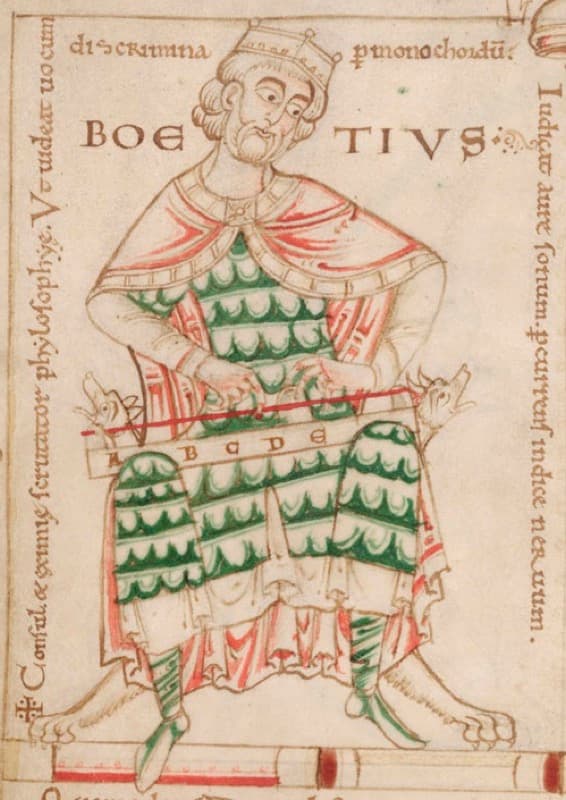
Born around 477 in Rome to one of the last great senatorial families, Anicius Manlius Severinus Boethius grew up in the household of Symmachus, whose daughter Rusticiana he married. He mastered Greek at a time when the knowledge was vanishing from the Latin West and set himself the task of translating the complete works of Plato and Aristotle into Latin. What he did complete, translations of and commentaries on Aristotle's logical works, became the foundation of medieval education, the texts through which a thousand years of students first encountered philosophy. He rose to become magister officiorum, chief minister of the Ostrogothic King Theodoric, the most powerful position a Roman could hold under barbarian rule. Then, in 523, he was accused of treason and conspiring with the Byzantine emperor. Imprisoned in Pavia while awaiting execution, stripped of everything, rank, library, freedom, he wrote The Consolation of Philosophy (524), a dialogue between himself and Lady Philosophy that moves from bitter complaint to a vision of divine providence encompassing all of time. It was composed without access to books, entirely from memory. Boethius was executed in 524, likely bludgeoned to death. His Consolation became one of the most copied and beloved books of the Middle Ages, rendered into English by King Alfred, Chaucer, and Queen Elizabeth I.
When the senator Albinus was charged with treasonous letters to Constantinople, Boethius rose in the royal council at Verona and declared that if Albinus was guilty, so was he and the whole Senate. The words were meant to shield his colleagues. They handed Theodoric the pretext to destroy him.
The first button needs the app on this device; the second gets it there.
In the canon
- The Consolation of Philosophy524 CE