
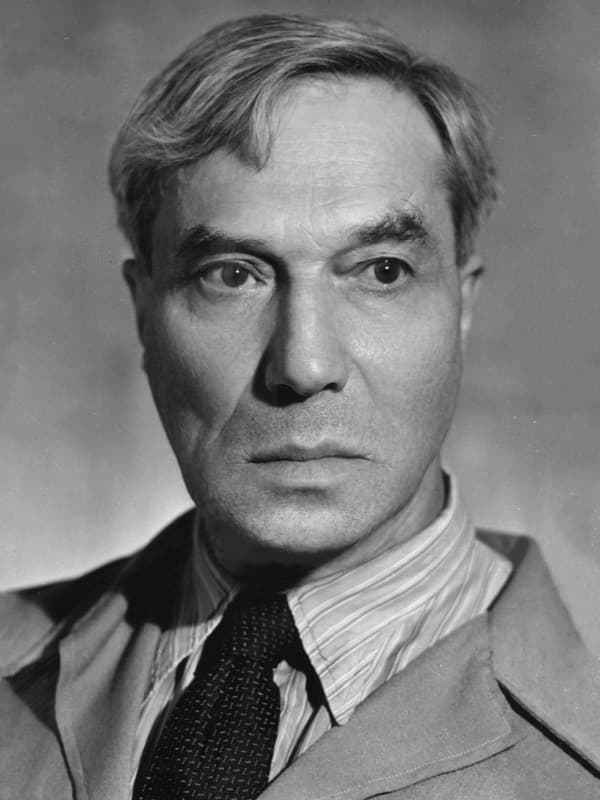
Author
Boris Pasternak
- Lived
- Lived 1890 to 1960
- From
- From Russian
- Born in
- Born in Moscow, Russia
Born in 1890 in Moscow into an artistic family, his father was a painter close to Tolstoy, his mother a concert pianist, Pasternak first pursued music under Scriabin, then philosophy at Marburg, before abandoning both for poetry. His early verse, particularly My Sister, Life (1922), written during the revolutionary summer of 1917, established him as one of Russia's supreme lyric poets, his lines dense with metaphor and the physical world bursting through syntax. He survived the Stalinist terror partly through translation: his Russian versions of Shakespeare and Goethe were masterworks that kept him employed while original creation grew dangerous. His lover Olga Ivinskaya was sent to the Gulag, and fellow writers perished around him. For over a decade he labored in secret on Doctor Zhivago, a novel of the Revolution told through the life of a poet-physician, whose lyrical sweep and critique of ideology made publication in the Soviet Union unthinkable. Smuggled to Italy by the publisher Feltrinelli, it appeared in 1957 and caused an international sensation. Pasternak was awarded the Nobel Prize in 1958 but was forced to decline it under threat of exile, writing to Khrushchev: "Leaving the motherland will equal death for me." He died of lung cancer in 1960, his funeral attended by thousands who recited his poems from memory as a quiet act of defiance.
In 1934 the telephone rang in Pasternak's Moscow flat, and Stalin was on the line, asking what the literary world made of the arrest of the poet Osip Mandelstam. Pasternak's answer came out hesitant and evasive, and Stalin, unimpressed that he would not defend a fellow poet, cut the call short.
I can't hear very well. And there's a mist in front of my eyes. But it will go away, won't it?
The first button needs the app on this device; the second gets it there.
In the canon
- Marburg1916
- Definition of Poetry1917
- Safe Conduct1931
- Doctor Zhivago1957