
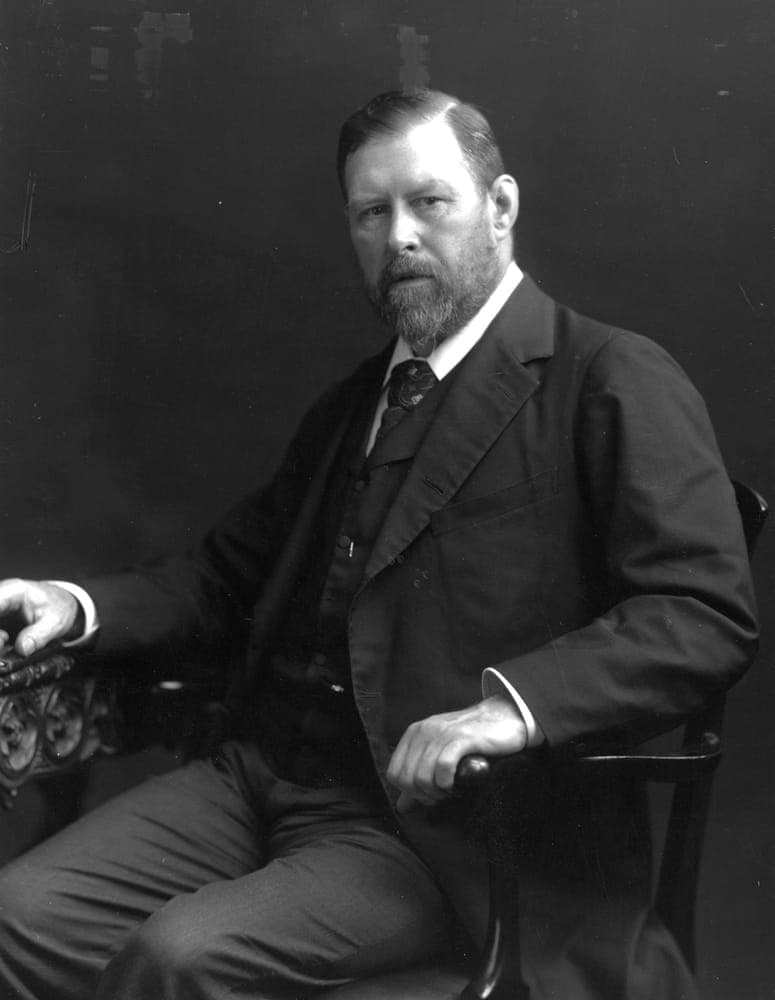
Author
Bram Stoker
- Lived
- Lived 1847 to 1912
- From
- From Irish
- Born in
- Born in Dublin, Ireland
Born Abraham Stoker on November 8, 1847, at 15 Marino Crescent in Clontarf, Dublin, the third of seven children, he was the son of a senior civil servant of the same name and Charlotte Thornley, a women's rights campaigner from County Sligo who told her children harrowing stories of the cholera epidemic she had survived in Sligo in 1832. He was bedridden by an undiagnosed illness for the first seven years of his life. When he stood up, he stood up an athlete, eventually captaining rugby at Trinity College Dublin and graduating with honours in mathematics in 1870. He spent a decade as a civil servant at Dublin Castle, wrote unpaid theatre criticism for the Dublin Evening Mail, and on the strength of a review of Hamlet attracted the friendship of the actor Sir Henry Irving. In 1878 he gave up the civil service to manage Irving's Lyceum Theatre in London, a position he held for twenty-seven years, until Irving's death broke both his finances and his health. He wrote in stolen hours, on summer holidays in Cruden Bay on the Aberdeenshire coast. Dracula (1897), drafted over seven years from notes on Transylvanian folklore, vampire legends, and the cliffs at Whitby, was constructed entirely from letters, diaries, and newspaper clippings. He wrote a dozen other novels, including The Mystery of the Sea (1902), The Jewel of Seven Stars (1903), and The Lair of the White Worm (1911), and a two-volume memoir of Irving in 1906. He died at 26 St George's Square in London on April 20, 1912, at the age of sixty-four, his Dracula reputation still a distant rumour around a writer chiefly remembered then as Irving's man of affairs.
On 14 September 1882, walking beside the Thames, Stoker watched an old man leap from a steamer to drown himself. He dove in after him, wrestled him back to the boat, then carried him to his house in Chelsea, where efforts to revive him failed. The Royal Humane Society gave Stoker its Bronze Medal for the rescue.
The first button needs the app on this device; the second gets it there.
In the canon
- Dracula1897
- The Jewel Of Seven Stars1903
- Dracula's Guest1914