
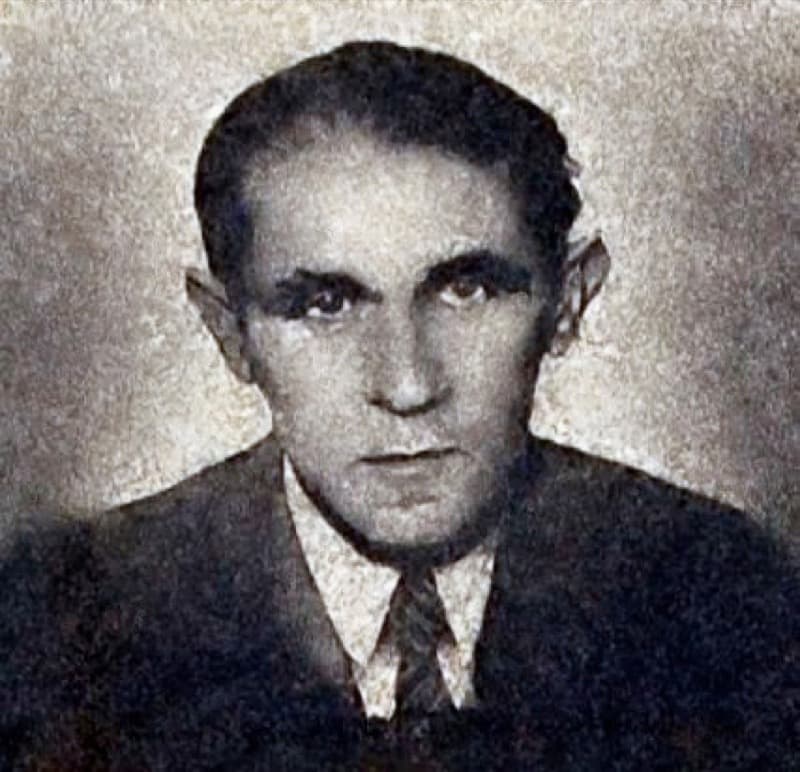
Author
Bruno Schulz
- Lived
- Lived 1892 to 1942
- From
- From Polish
- Born in
- Born in Drohobycz, Austrian Galicia (now Ukraine)
Born in 1892 in Drohobycz, a small town in Galicia under the Austro-Hungarian Empire, Schulz was the youngest child of a Jewish cloth merchant whose shop would become a recurring mythic space in his fiction. Painfully shy, he studied architecture in Lviv and Vienna but returned to Drohobycz, where he spent most of his life teaching drawing at a local gymnasium, a job he found crushing but could not escape. In obscurity he produced extraordinarily original drawings and began writing the prose that would make his reputation. The Street of Crocodiles (1934), transmuting his childhood and his father's illness into hallucinatory, metamorphic prose, was championed by the novelist Zofia Nalkowska, who helped bring it to publication. Sanatorium Under the Sign of the Hourglass (1937) continued the mythology of his father's decline in prose of even greater baroque intensity. He corresponded with Gombrowicz and Witkiewicz, the other great Polish modernists, but remained trapped in his provincial town. When the Germans occupied Drohobycz, a Gestapo officer named Felix Landau kept Schulz alive as a personal painter, commissioning murals for his child's nursery. On November 19, 1942, during a day of mass shootings known as "Black Thursday," another Gestapo officer shot Schulz dead in the street, reportedly telling Landau: "You killed my Jew, I killed yours." His unpublished novel, The Messiah, was lost forever.
By late 1942 he had a way out. He had obtained forged Aryan papers and smuggled his manuscripts, the unfinished novel The Messiah among them, to friends beyond the ghetto wall. He was preparing to slip out of Drohobycz under a false name when the Gestapo reached him first.
The first button needs the app on this device; the second gets it there.
In the canon
- The Street of Crocodiles1934
- Sanatorium Under The Sign Of The Hourglass1937
- The Complete Fiction Of Bruno Schulz1989