
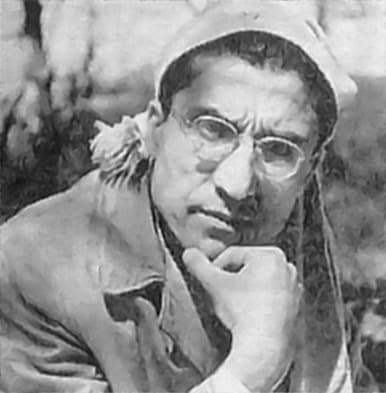
Author
Cesare Pavese
- Lived
- Lived 1908 to 1950
- From
- From Italian
- Born in
- Born in Santo Stefano Belbo, Italy
Born on September 9, 1908, in the village of Santo Stefano Belbo in the Piedmontese hills of Cuneo, Cesare Pavese was the son of a court clerk who died of a brain tumour when the boy was six. His mother, austere and unembraceable, raised him in Turin, where he attended the Liceo Massimo d'Azeglio under the antifascist teacher Augusto Monti. At the University of Turin he wrote his thesis on Walt Whitman and joined the circle around the publisher Giulio Einaudi, translating Melville's Moby-Dick at twenty-three in a version that became canonical Italian. In 1935 he was arrested for keeping the letters of an antifascist friend and sentenced to confino, internal exile, in the Calabrian village of Brancaleone. A year later he returned to Turin and to Einaudi, where he would work the rest of his life. While his friends took to the hills as partisans in 1943, Pavese spent the war hidden in a convent and on a farm near Casale Monferrato, a withdrawal he never forgave himself. After 1945 he joined the Italian Communist Party and wrote his best work in five rushed years: the novellas of The Beautiful Summer (1949), the dialogues with classical figures in Dialogues with Leucò (1947), and The Moon and the Bonfires (1950), the story of an emigrant's return to his Piedmont village to find what the war had done. He won the Strega Prize that summer. He had been in love with the American actress Constance Dowling, who left him. On August 27, 1950, in a hotel room in Turin, he swallowed an overdose of barbiturates. He was forty-one.
In August 1935 Pavese arrived in Brancaleone, a Calabrian village on the Ionian Sea, to serve three years of internal exile. The villagers took him in kindly. To his old teacher Augusto Monti he listed his days: catching flies, translating Greek, refusing to look at the sea. That October he began the notebook that became his diary.
I forgive everyone and ask everyone's forgiveness. All right? Don't gossip too much.
The first button needs the app on this device; the second gets it there.
In the canon
- Hard Labor1938
- The Harvesters1941
- Dialogues With Leucò1947
- The Beautiful Summer1949
- The Moon and the Bonfires1950
- Death Will Come and Will Have Your Eyes1950
- The Business of Living1952