
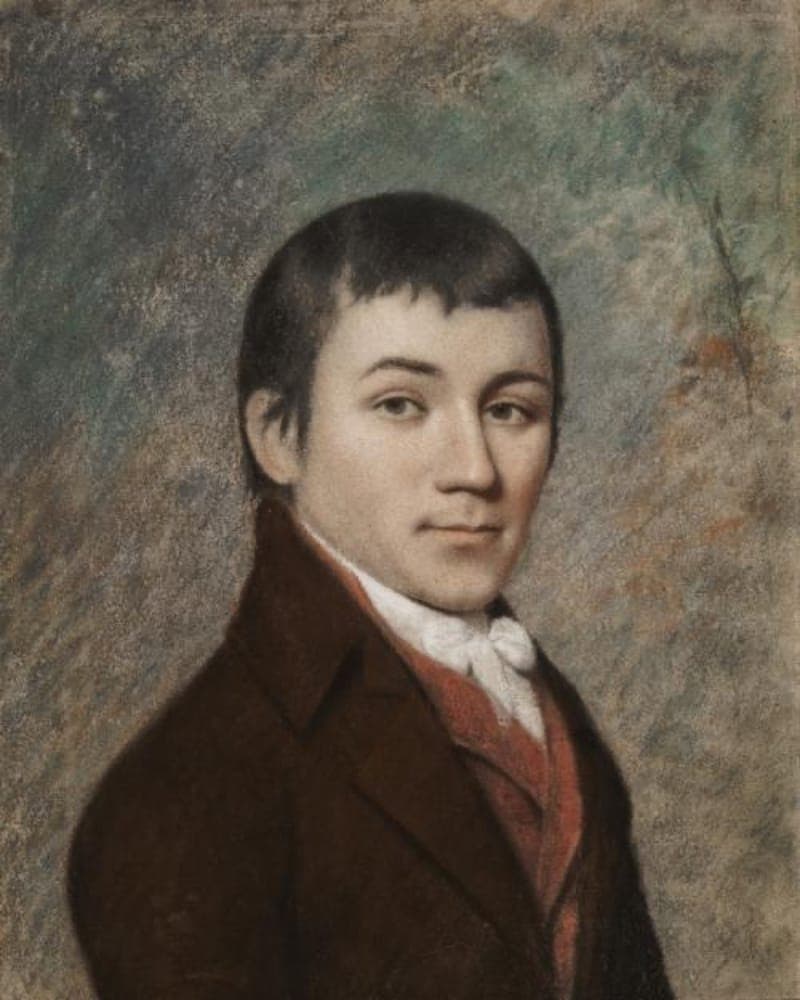
Author
Charles Brockden Brown
- Lived
- Lived 1771 to 1810
- From
- From American
Born on January 17, 1771, in Philadelphia, the fourth of five sons in a Quaker merchant family, Charles Brockden Brown was a frail, bookish child who read voraciously and abandoned outdoor play for the family library. At sixteen he entered the Friends' Latin School and was placed in the law office of Alexander Wilcocks, but the law repelled him, and after years of unease he gave it up entirely, to the dismay of his family. He drifted toward literature instead, joining a Philadelphia debating society and befriending a circle of freethinkers influenced by William Godwin and the radical politics of the 1790s. His first published book, Alcuin (1798), was a dialogue on the rights of women. That same year he produced Wieland, a tale of religious mania, ventriloquism, and a father consumed by spontaneous combustion, set on a lonely estate outside Philadelphia. In a single astonishing burst he followed it with Ormond (1799), Arthur Mervyn (1799-1800), and Edgar Huntly (1799), the last a Gothic romance of sleepwalking and frontier violence that turned the European haunted castle into the American wilderness. He wrote during the yellow fever epidemics that scourged Philadelphia and New York, and the plague enters his pages directly. He earned his living by the pen, the first American to attempt it, editing magazines and later turning to political pamphlets and a planned system of geography. His final novels, Clara Howard and Jane Talbot, both appeared in 1801. He married Elizabeth Linn in 1804 and fathered four children. Tubercular and failing, he died in Philadelphia on February 22, 1810, at the age of thirty-nine.
The first button needs the app on this device; the second gets it there.
In the canon
- Wieland1798
- Edgar Huntly1799