
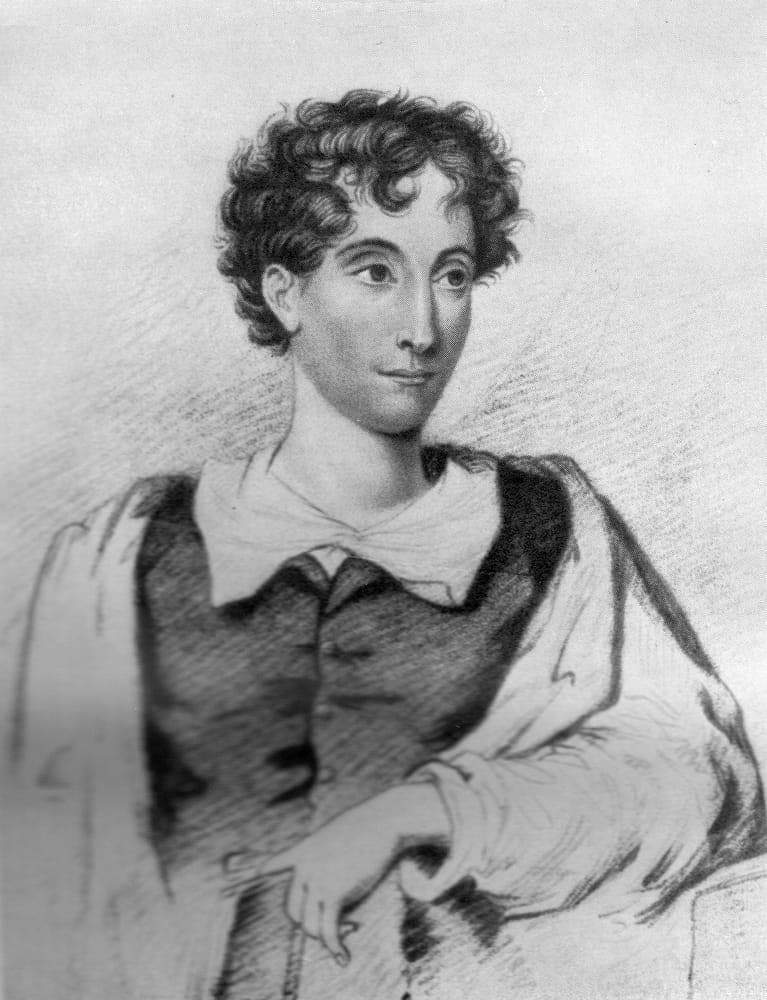
Author
Charles Robert Maturin
- Lived
- Lived 1780 to 1824
- From
- From Irish
Born on September 25, 1780, in Dublin to William Maturin, a Post Office official, and Fedelia Watson, Charles Robert Maturin descended from Huguenots who had fled France after the revocation of the Edict of Nantes and found shelter in Ireland. A great-grandfather had succeeded Jonathan Swift as Dean of Saint Patrick's Cathedral. Charles attended Trinity College Dublin, took orders in the Church of Ireland, and was appointed curate of Saint Peter's in Dublin, a position whose modest salary of eighty or ninety pounds a year forced him to write under the cloak of pseudonymous Gothic fiction to feed a growing family. His first three novels, published as Dennis Jasper Murphy, were critical and commercial failures, but they caught the attention of Walter Scott, who passed them to Lord Byron. Their backing put his tragedy Bertram on the Drury Lane stage in 1816, with Edmund Kean in the lead, for a profitable run of twenty-two nights. Samuel Taylor Coleridge denounced the play as atheistic, the Church of Ireland identified its author, and Maturin's clerical advancement was permanently blocked. Forced back to the novel, in 1820 he published Melmoth the Wanderer, a labyrinthine tale of a damned scholar bargaining for souls across continents and centuries, which left its mark on Balzac, Poe, and Baudelaire, who counted it among the founding texts of modern terror. Oscar Wilde, a great-nephew by marriage, took the name Sebastian Melmoth in his Parisian exile. Maturin died in Dublin on October 30, 1824, at forty-four, leaving four children and a small heap of debt, his clerical superiors still suspicious of the dark imagination they had failed to silence.
The first button needs the app on this device; the second gets it there.
In the canon
- Melmoth the Wanderer1820