
Author
Clarín
- Lived
- Lived 1852 to 1901
- From
- From Spanish
- Born in
- Born in Zamora, Spain
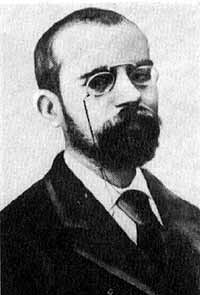
Born on April 25, 1852, in Zamora to Asturian parents posted to the city by the imperial bureaucracy, Leopoldo Enrique García-Alas y Ureña spent his childhood between León and Guadalajara before the family settled in Oviedo in 1863. The Asturian capital became his city for life. He completed his bachillerato there and began his law studies, then moved to Madrid from 1871 to 1878, where he found his footing as a journalist and adopted the pen name Clarín, the bugle, in 1875. He took his doctorate with a thesis on law and morality in 1878, taught Roman law briefly in Zaragoza, and in 1883 returned to Oviedo as professor of Roman law at the university there, a position he held until his death. As a critic he was feared. His short, slashing articles, known as paliques or chitchat, made him the most formidable literary voice in Spain, and his liberalism and anti-clericalism drew enemies in the church and the press. La Regenta, published in two volumes in 1884 and 1885, mapped the provincial capital of Vetusta, a thinly veiled Oviedo, through the marriage of Ana Ozores and her drift between the most handsome man in the city and her confessor the magistral, in a narrative whose free indirect style owed much to Madame Bovary. The novel was met with provincial outrage and quickly went out of print, recovered only in the twentieth century as one of the great realist achievements of nineteenth-century Europe. His one further novel, Su único hijo (1890), found a smaller audience. He died on June 13, 1901, in Oviedo of intestinal tuberculosis, aged forty-nine, leaving an outline for a sequel never written.
When La Regenta appeared in 1884, the Bishop of Oviedo, Ramón Martínez Vigil, condemned it in an official pastoral letter, accusing Clarín of handing his university students 'a book saturated with eroticism, mockery of Christian practices.' The city recognized itself as Vetusta, and did not forgive him quickly.
The first button needs the app on this device; the second gets it there.
In the canon
- La Regenta1884