
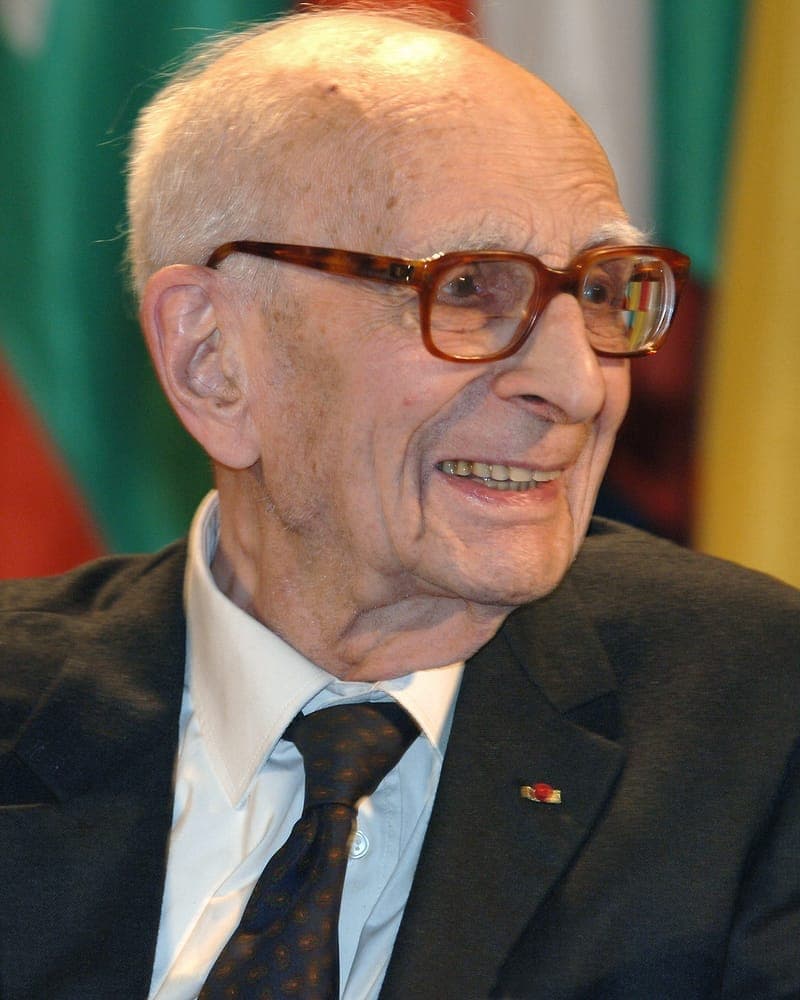
Author
Claude Lévi-Strauss
- Lived
- Lived 1908 to 2009
- From
- From French
Born Gustave Claude Lévi-Strauss on November 28, 1908, in Brussels to French-Jewish parents living temporarily in Belgium, where his father worked as a portrait painter, the future anthropologist grew up in the 16th arrondissement of Paris on a street named after the painter Claude Lorrain, whose work he loved. During the First World War he lived with his grandfather, the rabbi of Versailles, though he became an atheist in adulthood. He took the agrégation in philosophy in 1931, third in his class and the youngest at twenty-two, and three years later accepted a last-minute offer to join a French cultural mission to Brazil. From 1935 to 1939 he was visiting professor of sociology at the University of São Paulo and undertook with his wife Dina expeditions into the Mato Grosso and the Amazon, living among the Bororo, Nambikwara, and Tupi-Kawahib. The war drove him into exile: dismissed under Vichy racial laws, he escaped on the freighter Capitaine Paul-Lemerle to Martinique, then to New York, where at the New School he met Roman Jakobson and conceived the structural linguistics that would reshape ethnology. The Elementary Structures of Kinship (1949) made his name in the academy. Tristes Tropiques (1955), an account of his Brazilian fieldwork that opens with the sentence I hate travelling and explorers, brought him a popular readership and is one of the great unclassifiable books of the century. The Savage Mind (1962) and the four-volume Mythologiques (1964-1971) followed. He held the chair of social anthropology at the Collège de France from 1959 to 1982 and was elected to the Académie française in 1973. He died in Paris on October 30, 2009, three weeks short of his one hundred and first birthday.
The first button needs the app on this device; the second gets it there.
In the canon
- Tristes Tropiques1955
- The Savage Mind1962