
Author
Confucius
- Lived
- Lived 551 BCE to 479 BCE
- From
- From Chinese
- Born in
- Born in Zou, State of Lu, China
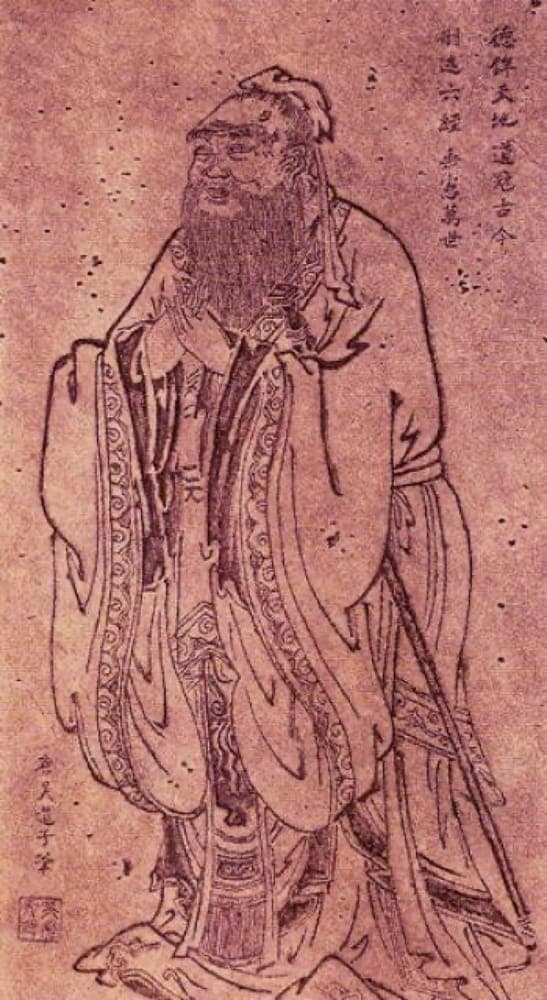
Born around 551 BCE in the town of Zou, in the state of Lu, present-day Qufu in Shandong province, China, during the Spring and Autumn period, Kong Qiu came from a family of minor nobility fallen into poverty. His father, a soldier said to have been over seventy, died when the boy was three, and his mother raised him in straitened circumstances. He worked young as a clerk managing granaries and herds, and educated himself in ritual, music, history, and poetry, the disciplines he came to revere as the inheritance of an older, more ordered age. He served briefly as a magistrate and minister of crime in Lu, then left office and spent more than a decade wandering from state to state, seeking a ruler who would govern by virtue rather than force. None would. He returned to Lu in his late sixties and devoted his last years to teaching, gathering disciples said to number three thousand, seventy-two of whom mastered his way. He taught that moral cultivation begins at home, that the gentleman rules himself before he rules others, and that ritual and humaneness, ren, hold society together. He wrote no systematic treatise. The Analects, compiled by his followers after his death, records his sayings and exchanges, the closest thing we have to his voice. He is traditionally credited with editing the Book of Songs, the Book of Documents, and the Spring and Autumn Annals. He died in 479 BCE, around the age of seventy-two, lamenting that no ruler had taken up his teaching. Within centuries his thought became the foundation of the Chinese state, and his descendants are still recorded to the present day.
When his favorite disciple, Yan Hui, died young, Confucius cried out twice, 'Heaven has bereft me!' Students told him he wept too hard for a mere follower. He answered: for whom should I grieve like this, if not for this man? He never found another student to fill the place Yan Hui left.
Heaven has turned against me. No wise ruler arises, and no one in the Empire wishes to make me his teacher. The hour of my death has come.
The first button needs the app on this device; the second gets it there.
In the canon
- Analects479 BCE