
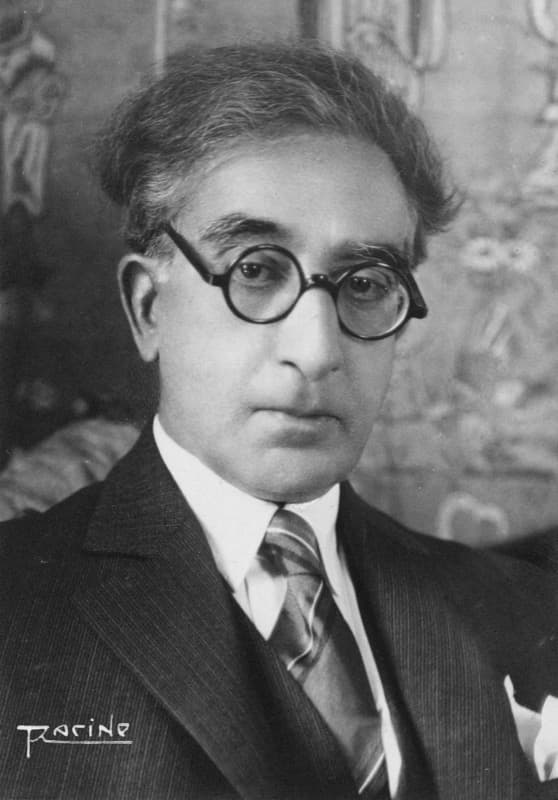
Author
C.P. Cavafy
- Lived
- Lived 1863 to 1933
- From
- From Greek
- Born in
- Born in Alexandria, Egypt
Born in 1863 in Alexandria, Egypt, to a prosperous Greek family in the cotton trade, Constantine Cavafy lost his father at age seven, and the family's finances gradually disintegrated. His mother took the children to Liverpool and then London, where Cavafy acquired the English that would later inflect his Greek in subtle ways. Returning to Alexandria at sixteen, he briefly lived in Constantinople during a period of upheaval that deepened his sense of the precariousness of civilizations. He spent thirty years as a clerk in the Egyptian Ministry of Public Works, remarking that he stood where a poet and a civil servant overlapped, and that the point of intersection was small. He published almost nothing conventionally, instead distributing poems in folders and broadsheets to a small circle. Yet those poems, "Ithaka" (1911), "Waiting for the Barbarians" (1904), "The City" (1910), became among the most influential in modern literature, their spare, ironic voice treating desire, aging, and historical defeat with an authority that transcended their modest circulation. He wrote openly about homoerotic love decades before it was safe to do so, setting poems in ancient Alexandria and Antioch as both historical evocation and personal confession. E. M. Forster, stationed in Alexandria during the First World War, became an early champion. Cavafy died on April 29, 1933, his seventieth birthday, of cancer of the larynx, the organ of voice itself, having spent his last days unable to speak.
In June 1882, sensing danger, Cavafy's mother took her sons from Alexandria to Constantinople. Two weeks later the British fleet bombarded Alexandria for three days; their house burned in the fires that followed, and with it his boyhood library and earliest writings. The family did not return to Alexandria for three years.
The first button needs the app on this device; the second gets it there.
In the canon
- Walls1896
- Candles1899
- Che Fece … Il Gran Rifiuto1901
- Thermopylae1903
- Waiting for the Barbarians1904
- The City1910
- Ithaka1911
- The God Abandons Antony1911
- Alexandrian Kings1912
- But the Wise Perceive Things About to Happen1915