
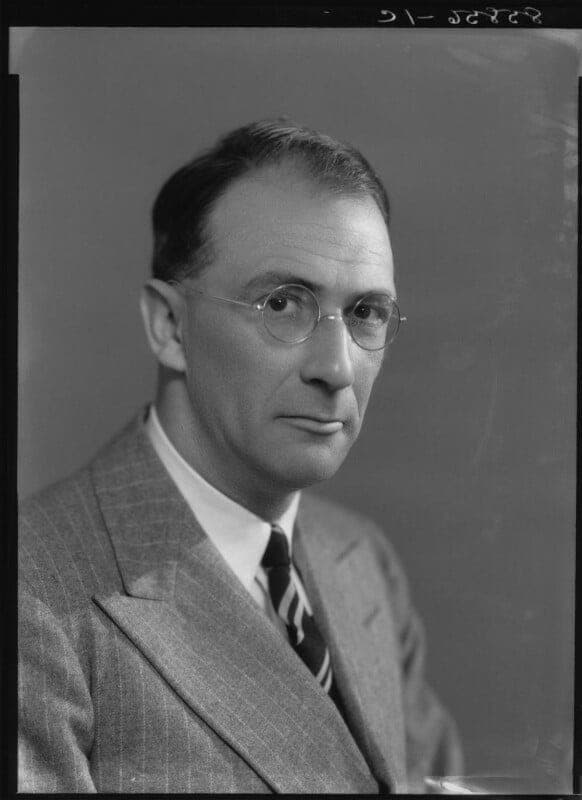
Author
C.S. Forester
- Lived
- Lived 1899 to 1966
- From
- From British
Cecil Louis Troughton Smith was born on 27 August 1899 in Cairo, then under British control, and grew up in London after his mother brought the family home; he attended Alleyn's School and Dulwich College and began a medical degree at Guy's Hospital before abandoning it for writing, adopting the pen name C. S. Forester around 1921. His first real success came with the crime novel Payment Deferred (1926), and through the 1920s and 1930s he moved restlessly between genres, from true crime to war fiction to the sea stories that would become his signature, including Brown on Resolution and The African Queen. In 1937 he introduced Captain Horatio Hornblower in The Happy Return, published in America as Beat to Quarters, and followed it within a year with A Ship of the Line and Flying Colours, which together won the James Tait Black Memorial Prize; he kept extending the saga, forward and backward through Hornblower's career, across eleven novels until his death. During the Second World War he settled in Berkeley, California, writing propaganda for the British Ministry of Information and befriending a young Roald Dahl, whom he encouraged to write up his own wartime flying stories. Forester also worked in Hollywood, and lived to see The African Queen become John Huston's celebrated 1951 film with Humphrey Bogart and Katharine Hepburn. In his later years he settled at his son's home in Fullerton, California, still turning out Hornblower novels almost to the end, and suffered a disabling stroke in 1964. He died on 2 April 1966, at the age of sixty six, having given the Royal Navy of the Napoleonic Wars its most enduring fictional officer.
The first button needs the app on this device; the second gets it there.
In the canon
- The African Queen1935
- Captain Hornblower R.N.1937