
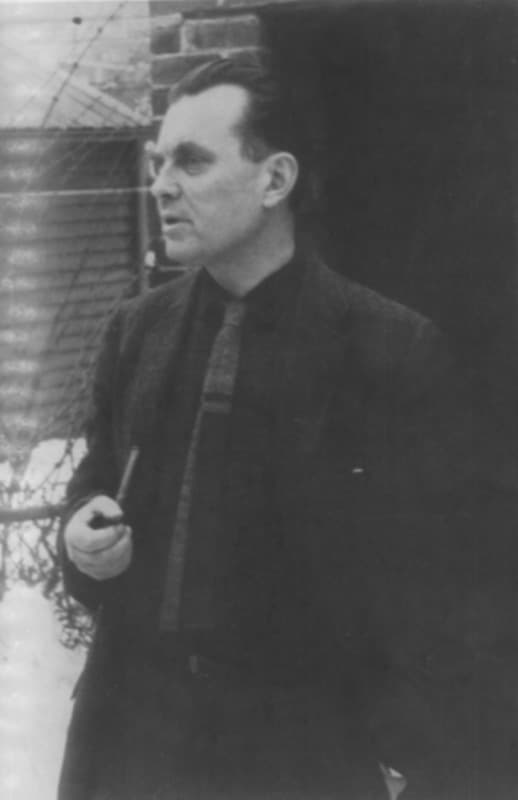
Author
Czesław Miłosz
- Lived
- Lived 1911 to 2004
- From
- From Polish
- Born in
- Born in Szetejnie, Lithuania
Born on June 30, 1911, in Szetejnie, a village in the Lithuanian countryside of the Russian Empire, Czeslaw Milosz grew up speaking Polish in a multilingual borderland that would change nationalities four times in his lifetime. His father was a civil engineer who built roads for the Russian army during the First World War, dragging the family across Siberia and back. Milosz studied law at Stefan Batory University in Vilnius, published his first poetry in 1933, and cofounded the literary group Zagary. When the Nazis occupied Warsaw, he remained in the city, working with the underground and witnessing the destruction of the Warsaw Ghetto from the other side of the wall. After the war he served as a cultural attache for the communist government before defecting in 1951, an act that made him a nonperson in Poland for three decades. The Captive Mind (1953), his anatomy of intellectual collaboration with totalitarianism, became one of the defining texts of the Cold War. He spent a lonely decade in Paris before accepting a professorship at Berkeley in 1961, where he taught Slavic literatures for nearly thirty years in relative obscurity. The 1980 Nobel Prize in Literature stunned him and reintroduced his work to Poland, where Solidarity activists printed his poems on underground presses. His Collected Poems (1988) revealed a lyrical intelligence haunted by history. He returned to Krakow in 1993 and died there on August 14, 2004, at ninety-three, buried in the crypts of the Church on the Rock alongside Poland's greatest writers.
A carousel spun in a Warsaw square in the spring of 1943 while, a few streets away, the Jewish ghetto burned, its smoke drifting over the laughing riders. Miłosz watched from the other side of the wall, and out of that obscene contrast wrote Campo dei Fiori, on the loneliness of the dying and the indifference of the living.
The first button needs the app on this device; the second gets it there.
In the canon
- A Song on the End of the World1944
- The Captive Mind1953
- The Issa Valley1955
- Native Realm1959
- Ars Poetica?1968
- Daylight1975