
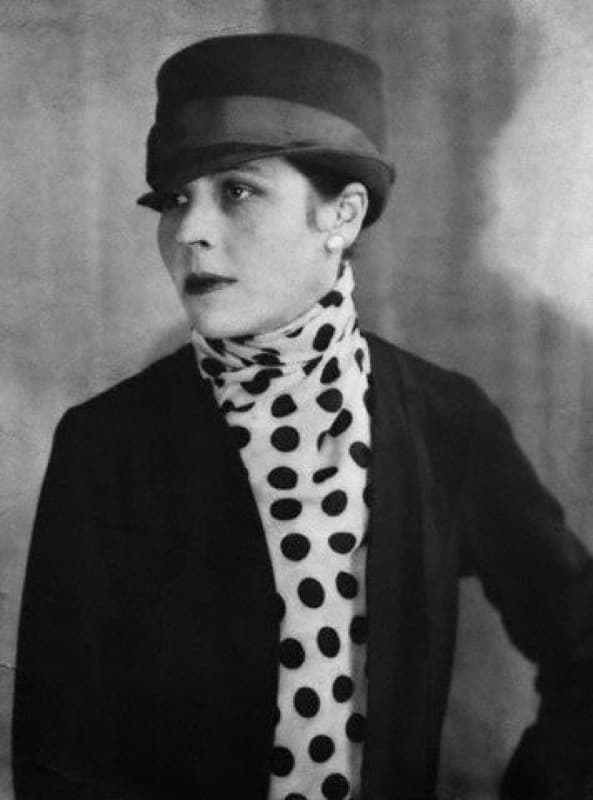
Author
Djuna Barnes
- Lived
- Lived 1892 to 1982
- From
- From American
- Born in
- Born in Cornwall-on-Hudson, New York
Born in 1892 in a log cabin on Storm King Mountain in Cornwall-on-Hudson, New York, Djuna Barnes was raised in a chaotic household governed by her polygamist father and spiritualist grandmother, who oversaw her education at home and subjected her to experiences that scarred her permanently. At eighteen she was sent to Brooklyn to support the family as a journalist and illustrator, producing vivid, sometimes stunt-driven features for newspapers in which she was once force-fed to report on the suffragettes' plight. She moved to Paris in the early 1920s and became a fixture of the Left Bank expatriate world, drinking with Joyce at Café de Flore and sitting for portraits by Man Ray. Her novel Nightwood (1936), championed by T.S. Eliot, who wrote its introduction, is a fever-dream of doomed love among outcasts in the nocturnal cities of Europe, written in a baroque, incantatory prose that belongs to no school. Its frank depiction of lesbian desire made it both celebrated and shunned. After Paris, Barnes returned to New York and withdrew almost entirely from public life, spending the last four decades in a tiny apartment at Patchin Place in Greenwich Village, writing little and seeing almost no one. She died there in 1982 at ninety, having outlived nearly everyone who remembered the world her great novel conjured.
In her last decades at Patchin Place, Barnes rarely opened her door, even to old friends. Her neighbor across the courtyard, the poet E. E. Cummings, took to leaning out his window and calling over, half joking, 'Are you still alive, Djuna?' Some days she answered. Most days the question just hung in the air.
The first button needs the app on this device; the second gets it there.
In the canon
- Ryder1928
- Nightwood1936
- The Antiphon1958