
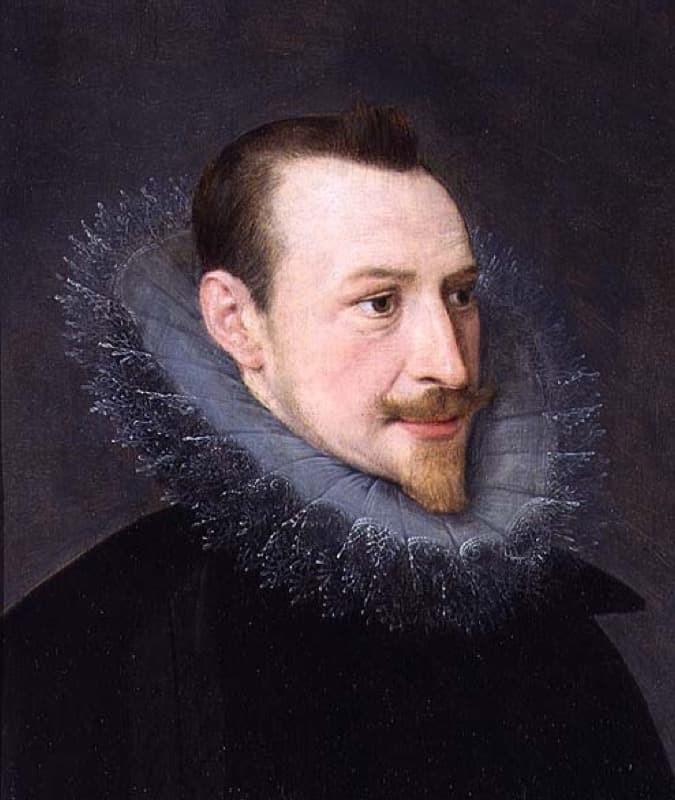
Author
Edmund Spenser
- Lived
- Lived 1552 to 1599
- From
- From English
- Born in
- Born in London, England
Born around 1552 in East Smithfield, London, probably the son of a journeyman clothmaker, Edmund Spenser was educated at the Merchant Taylors’ School before entering Pembroke College, Cambridge, as a sizar, a student who received financial assistance in exchange for performing menial duties. At Cambridge he befriended the scholar Gabriel Harvey and began shaping the elaborate verse music that would define his career. The Shepheardes Calender (1579), a sequence of twelve pastoral eclogues, announced a new ambition for English poetry and caught the attention of Sir Philip Sidney and the Earl of Leicester. In 1580 Spenser went to Ireland as secretary to the Lord Deputy, Arthur Grey, and remained there for nearly two decades, acquiring the estate of Kilcolman Castle in County Cork amid the ruins of the Munster Plantation. It was at Kilcolman, visited by Sir Walter Raleigh, that he composed the bulk of The Faerie Queene, an allegorical epic celebrating Elizabeth I and the Tudor dynasty through interlocking tales of knights, enchantresses, and moral trials. The first three books appeared in 1590 and earned him a royal pension of fifty pounds a year; the second three followed in 1596. He invented the nine-line stanza that bears his name, eight iambic pentameter lines followed by an alexandrine, a form later adopted by Byron, Keats, and Shelley. Of the projected twelve books, only six and a fragment survive. In 1598, during the Nine Years’ War, Irish forces burned Kilcolman; Ben Jonson claimed that one of Spenser’s infant children perished in the fire. Spenser fled to London, where he died on January 13, 1599, reportedly in poverty. He was buried in Westminster Abbey near the grave of Geoffrey Chaucer, and fellow poets threw pens and verses into his tomb.
In 1594, Spenser married Elizabeth Boyle, his second wife, on the summer solstice, then complained about his own choice in verse: the year's longest day meant the shortest night, and his wedding song counts down the hours until darkness finally lets the marriage begin.
The first button needs the app on this device; the second gets it there.
In the canon
- The Shorter Poems1579
- The Shepheardes Calender1579
- The Faerie Queene1590
- Amoretti1595
- Epithalamion1595
- Sonnet I (Happy ye leaves)1595
- Sonnet XXX (My love is like to ice)1595
- Sonnet LIV (Of this world's theatre)1595
- Sonnet LXVII (Like as a huntsman)1595
- Sonnet LXXV (One day I wrote her name)1595
- Sonnet LXXIX (Men call you fair)1595
- The Mutabilitie Cantos1609