
Author
Epictetus
- Lived
- Lived 50 CE to 135 CE
- From
- From Ancient Greek
- Born in
- Born in Hierapolis, Phrygia
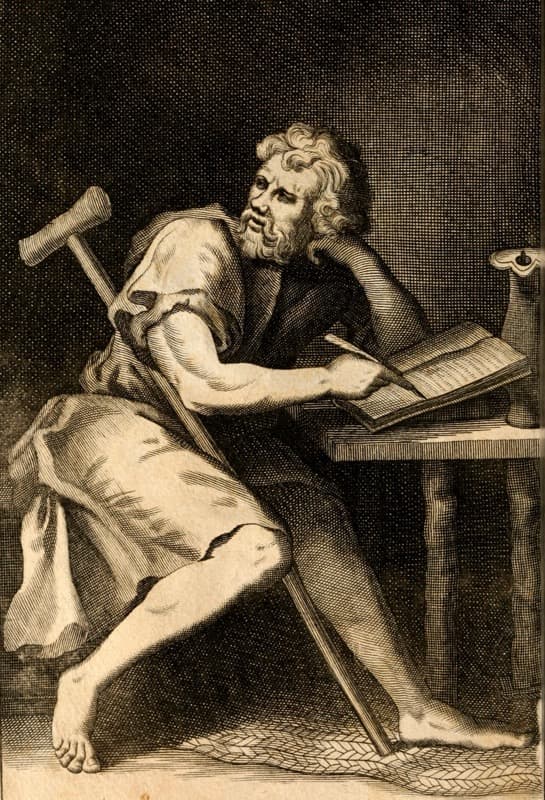
Born around 50 CE in Hierapolis, Phrygia, present-day Pamukkale in western Turkey, Epictetus entered the world as a slave, and his very name, from the Greek epiktetos, means simply “acquired.” He was owned by Epaphroditus, a wealthy freedman who had served as secretary to the emperor Nero. Ancient sources disagree on whether his lameness was congenital or inflicted by a cruel master, Origen claimed his leg was deliberately broken, while Simplicius said he had been lame from childhood, but the disability became central to his teaching, a living illustration that the body belongs to the realm of things not in our control. With Epaphroditus’s permission, he studied Stoic philosophy under Musonius Rufus, the most respected Stoic teacher in Rome, and after gaining his freedom sometime following Nero’s death in 68 CE, he began teaching in the city. When the emperor Domitian expelled all philosophers from Rome around 93 CE, Epictetus relocated to Nicopolis in northwestern Greece, where he founded a school that attracted students from across the empire. He wrote nothing. Everything we have comes from his student Arrian of Nicomedia, who around 108 CE transcribed his lectures into the Discourses, originally eight books, of which four survive, and distilled their essence into the Enchiridion, or Handbook, a pocket manual of Stoic practice. His central teaching was the distinction between what is “up to us” (our judgments, desires, and responses) and what is not (our bodies, possessions, reputations, and the actions of others). He lived simply, reportedly owning only a straw mat, a blanket, and an earthen lamp. He died around 135 CE in Nicopolis, having never written a word, yet his influence, through Marcus Aurelius, who studied the Discourses closely, shaped Western philosophy for two millennia.
A thief once stole the iron lamp Epictetus kept beside his household shrine. He did not rage. He reasoned that the thief had simply outmatched him in vigilance, and paid for the theft by consenting to become a thief. The next lamp he bought was cheap earthenware, easier to lose.
The first button needs the app on this device; the second gets it there.
In the canon
- Discourses Of Epictetus108 BCE
- Discourses108 CE
- The Enchiridion135 CE