
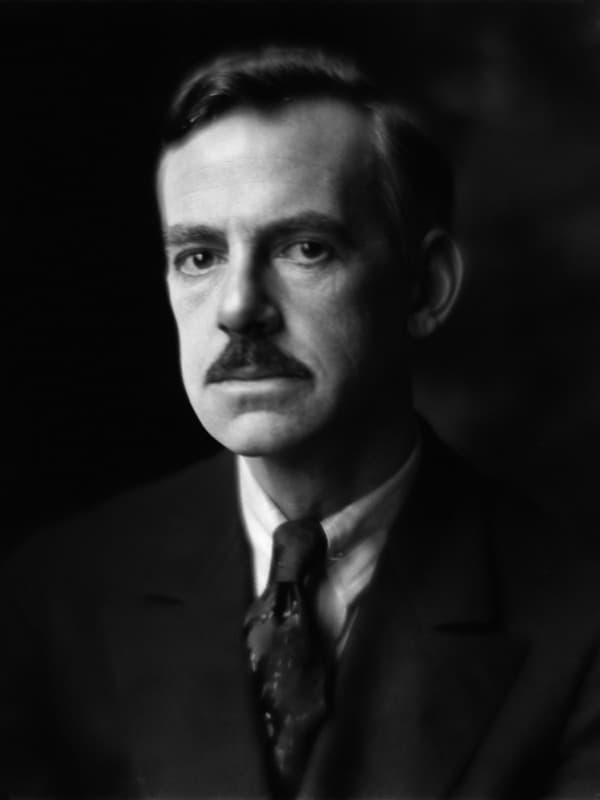
Author
Eugene O'Neill
- Lived
- Lived 1888 to 1953
- From
- From American
- Born in
- Born in New York City, USA
Born on October 16, 1888, in a hotel room at the Barrett House on what was then Longacre Square, now Times Square, in New York City, Eugene Gladstone O’Neill was the son of James O’Neill, a celebrated actor trapped by his own success in the role of the Count of Monte Cristo, which he performed more than six thousand times. His mother, Ella Quinlan, became addicted to morphine after a difficult childbirth, a secret that haunted the family and that O’Neill would dramatize with lacerating honesty in Long Day’s Journey into Night. He was expelled from Princeton after one year, spent time as a seaman, a gold prospector in Honduras, and a derelict in waterfront bars, and attempted suicide in 1912 at a flophouse called Jimmy the Priest’s. That same year he contracted tuberculosis, and during his recovery at the Gaylord Farm Sanatorium in Connecticut, which he later called his rebirth, he resolved to become a playwright. He studied under George Pierce Baker at Harvard and joined the Provincetown Players, who staged his early one-act sea plays on a wharf in Cape Cod. Beyond the Horizon (1920) won the first of his four Pulitzer Prizes. He won the Nobel Prize in Literature in 1936, the only American dramatist ever so honored. His late masterpieces, The Iceman Cometh (1946) and Long Day’s Journey into Night (written 1941, published posthumously in 1956), are regarded as the pinnacle of American tragic drama. He spent his final years in a Boston hotel, his hands trembling from a degenerative neurological condition that made writing impossible. He died on November 27, 1953, at the age of sixty-five.
On the night of July 28, 1916, a converted fishing shack on a Provincetown wharf staged his one-act Bound East for Cardiff. The tide was high, and seawater sprayed up through gaps in the floorboards as the actors spoke, so the audience heard the real ocean beneath a play about a dying sailor.
I knew it. I knew it. Born in a hotel room and, God damn it, died in a hotel room.
The first button needs the app on this device; the second gets it there.
In the canon
- Anna Christie1921
- The Hairy Ape1922
- Desire Under The Elms1924
- Strange Interlude1928
- Mourning Becomes Electra1931
- The Iceman Cometh1946
- A Moon for the Misbegotten1952
- Long Day's Journey into Night1956