
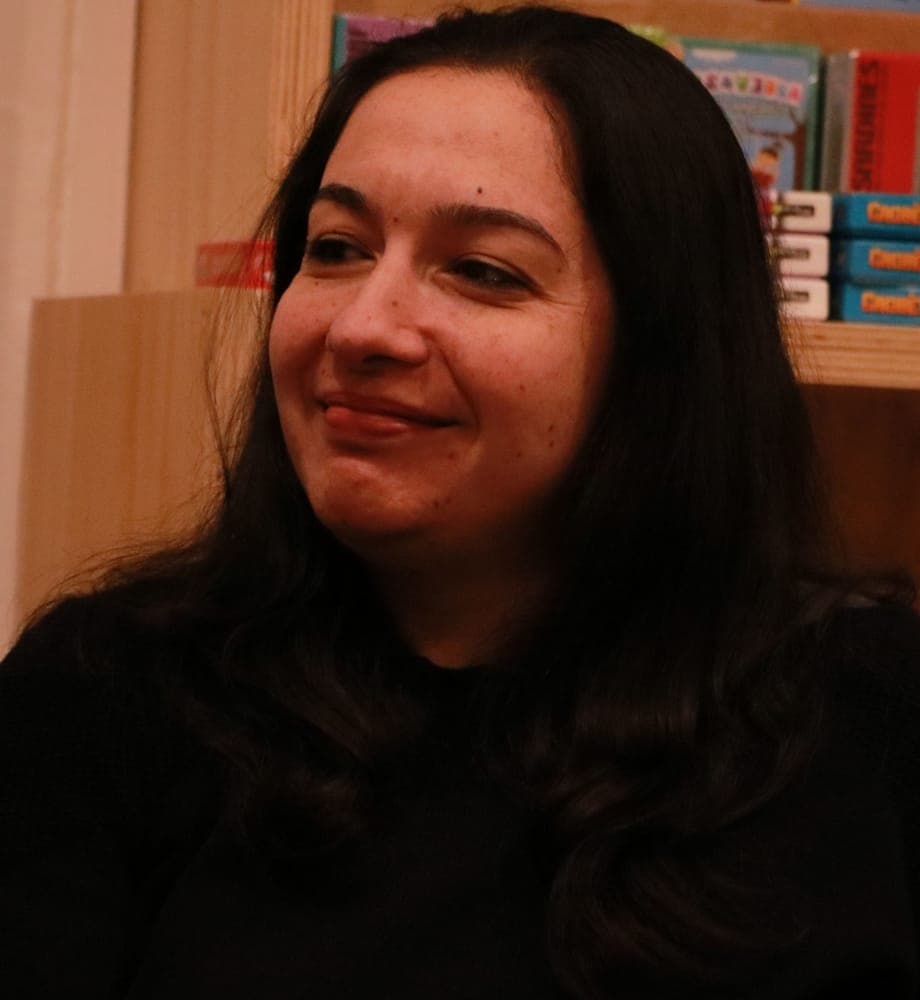
Author
Fernanda Melchor
- Lived
- Lived born 1982
- From
- From Mexican
- Born in
- Born in Boca del Río, Veracruz, Mexico
Born in 1982 in Boca del Río, on the Gulf Coast of Veracruz, Mexico, Fernanda Melchor grew up in a household unsettled by her father's drinking and her mother's long struggle with mental illness. She studied journalism at the Universidad Veracruzana, working afterward in the university's communications office, and went on to earn a master's degree in aesthetics and art at the Benemérita Universidad Autónoma de Puebla. She spent years reporting on crime and violence around Veracruz before publishing her first books in 2013: the novel Falsa liebre and Aquí no es Miami, a collection of literary reportage about the port's smugglers, addicts, and drifters. Reporting on a real murder, a woman known locally as a witch found dead in a ditch, she first planned a nonfiction account in the mode of Truman Capote, then judged fiction the safer vessel for a story that implicated men still living in a region ruled by traffickers. The result, Temporada de huracanes (2017), translated into English as Hurricane Season by Sophie Hughes in 2020, tells of a similar killing through the run-on, unpunctuated voices of a Veracruz village, and made her one of the most acclaimed Latin American novelists of her generation: winner of the Anna Seghers Prize and Germany's International Literature Award, shortlisted for the International Booker Prize, and later ranked among the New York Times' 100 Best Books of the 21st Century. Páradais (2021), narrated by a groundskeeper's son complicit in a killing at a gated community, was shortlisted for the Dublin Literary Award. In 2023 the English translation of Aquí no es Miami, retitled This Is Not Miami, was longlisted for the National Book Award for Translated Literature, and in 2024 it won the Ryszard Kapuściński Award for literary reportage. She has also translated English-language writers, among them Sandra Cisneros and Brit Bennett, into Spanish. She lives and teaches in Puebla.
While reporting in Veracruz, Melchor read of a woman known as a witch, found dead in a ditch, killed by a former lover enraged to learn she had cast a spell to draw him back. She pictured a Capote-style book, interviewing the killer and the village, then chose fiction instead: journalists who ask too many questions do not always survive.
The first button needs the app on this device; the second gets it there.
In the canon
- Hurricane Season2017