
Author
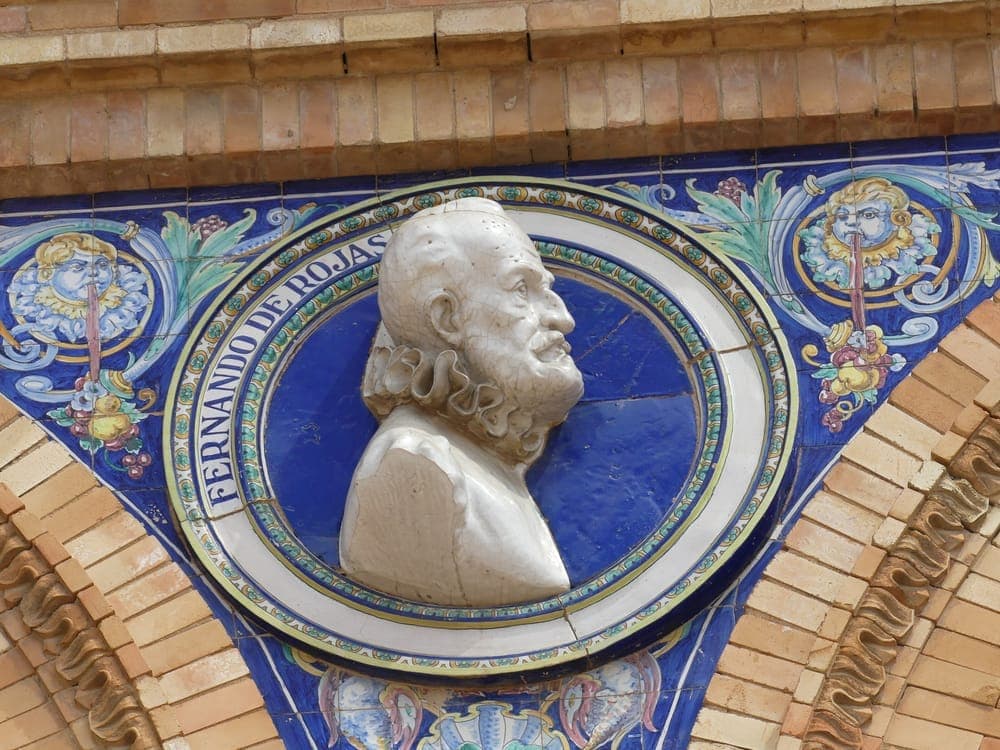
Fernando de Rojas
- Lived
- Lived 1470 to 1541
- From
- From Spanish
- Born in
- Born in La Puebla de Montalbán, Toledo
Born about 1470 in La Puebla de Montalbán, a small town in the province of Toledo, into a converso family of Jewish descent whose advancement to hidalgo status reached back three generations, Fernando de Rojas grew up under the shadow of an Inquisition that watched any household with such ancestry. He studied law at the University of Salamanca, where, by his own account in the prefatory letter to the work, he found the first act of a Spanish dramatic fragment by an unknown hand, was taken by its grave wit, and over a fortnight's holiday completed the remaining twenty acts. The result, the Tragicomedia de Calisto y Melibea, was first printed in Burgos in 1499 and known almost from the start by the name of its true protagonist, the elderly bawd Celestina, who arranges the doomed love affair of the young Calisto and Melibea. The book is variously called the last work of the Spanish Middle Ages and the first work of the Spanish Renaissance, neither drama nor novel but something in between, eighty thousand words of dialogue with no stage instruction. He took his degree about 1498, returned home, married Leonor Álvarez de Montalbán, another converso, and had four sons and three daughters. About 1507 he moved to Talavera de la Reina, where he practised law for the rest of his life and served a term as mayor in the 1530s. When his father-in-law was charged with Judaising in 1525, the Inquisition refused to let him act as defending counsel because of his ancestry. He died at Talavera in April 1541, leaving a will and a library inventory but no second book.
While studying law at Salamanca, Rojas came across the unfinished first act of a play by an unknown hand. Taken with its wit, he spent a fortnight's holiday writing the remaining twenty acts himself, turning a fragment he had merely found into Celestina.
The first button needs the app on this device; the second gets it there.
In the canon
- Celestina Or The Tragic-Comedy Of Calisto And Melibea1499
- La Celestina (The Spanish Bawd)1499