
Author
Francisco de Quevedo
- Lived
- Lived 1580 to 1645
- From
- From Spanish
- Born in
- Born in Madrid, Spain
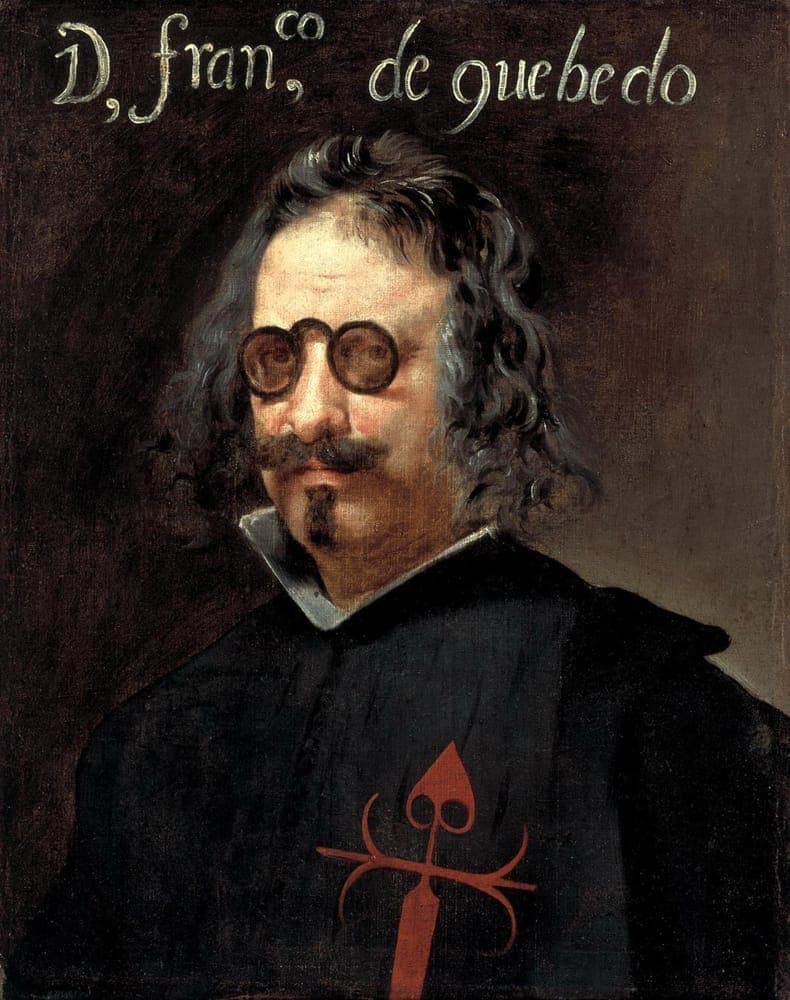
Born on September 14, 1580, in Madrid, to a family of minor nobility long attached to the Habsburg court, Francisco Gomez de Quevedo y Santibanez Villegas grew up amid the machinery of royal service, his father a secretary to the queen and his mother a lady-in-waiting. Orphaned young, he was educated by the Jesuits and then at Alcala and Valladolid, where he read theology, languages, and law, and earned a reputation for ferocious wit and a sharper tongue. He walked with a limp and wore the round spectacles that fixed his image for posterity and lent his name to the Spanish word for them. He entered the service of the Duke of Osuna, the viceroy of Naples and Sicily, running covert missions across Italy, and his fortunes rose and fell with his patron's, leading to years of disgrace and confinement. Quevedo poured his learning into satire, verse, and prose, sparring in print with the rival poet Luis de Gongora. His picaresque novel La Vida del Buscon (1626), known in English as Pablo de Segovia, the Spanish Sharper, follows a swindler's descent through a Spain of beggars, cheats, and grandees. The Suenos (1627), dream-visions of a corrupt and grotesque world, and the moral treatise La Cuna y la Sepultura (1634) deepened his reckoning with vanity and death. In 1639 he was arrested, accused of a libelous poem against the king's favorite, and held for years in a damp convent cell at Leon, which broke his health. Released in 1643, he died at Villanueva de los Infantes on September 8, 1645, eleven days short of sixty-five.
In 1620 Quevedo bought the Madrid house that his rival Luis de Góngora rented, and evicted him from it in 1625, citing unpaid rent. A decade of dueling sonnets that mocked Góngora's nose and his taste for gambling ended not with a poem but with a landlord's notice.
The first button needs the app on this device; the second gets it there.
In the canon
- The Swindler1626
- Amor constante más allá de la muerte1626
- Love, Constant Beyond Death1640