
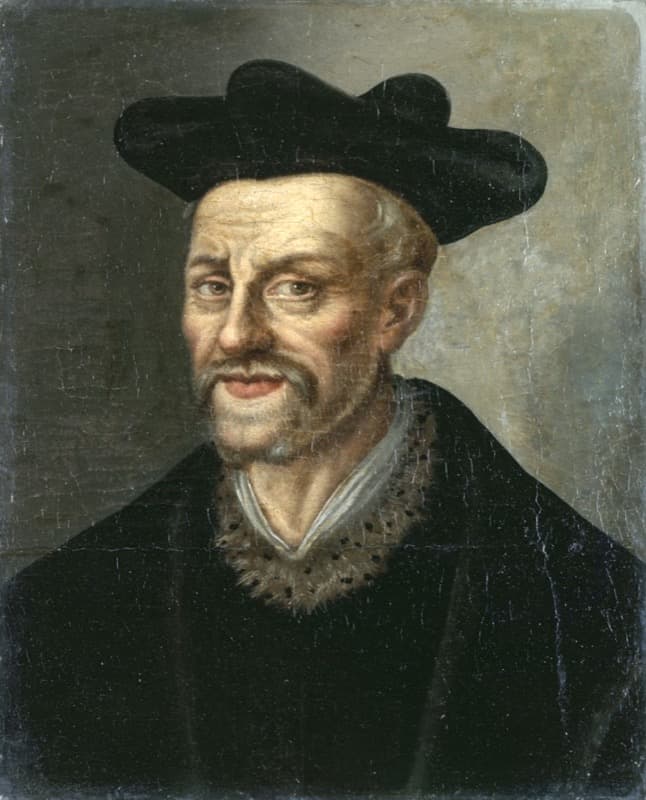
Author
François Rabelais
- Lived
- Lived 1494 to 1553
- From
- From French
- Born in
- Born in Chinon, France
Born around 1494 in Chinon, in the Loire Valley of France, the exact date remains uncertain, François Rabelais was the son of Antoine Rabelais, a prosperous lawyer. He entered the Franciscan friary at Fontenay-le-Comte as a young man and devoted himself to the study of Greek and Latin, but the Franciscans confiscated his Greek books, suspicious of humanist learning, and he transferred to the more lenient Benedictine order before eventually obtaining papal permission to leave monastic life altogether. He studied medicine at the University of Montpellier, where he lectured on Hippocrates and Galen, and was appointed physician at the Hôtel-Dieu hospital in Lyon in 1532. That same year, under the anagrammatic pseudonym Alcofribas Nasier, he published Pantagruel, the first of five novels chronicling the adventures of the giant Gargantua and his son Pantagruel. Gargantua (1534) followed as a prequel, and three further books appeared over the next two decades, the last posthumously and of disputed authorship. The novels, bawdy, encyclopedic, overflowing with lists, puns, scatological humor, and humanist erudition, constitute the great comic masterpiece of the French Renaissance. They were repeatedly condemned by the Sorbonne’s Faculty of Theology, and Rabelais survived largely through the protection of powerful patrons, including Cardinal Jean du Bellay, whom he accompanied to Rome on diplomatic missions. His prose celebrates the body, appetite, and knowledge with a freedom that scandalized his age and anticipated the Enlightenment. The word “Rabelaisian” survives in English as a shorthand for robust, earthy, and exuberant humor. He died in Paris in April 1553. His alleged last words, “I go to seek a great perhaps”, are almost certainly apocryphal, but perfectly in character.
Around 1537, working as a physician in Lyon, Rabelais dissected the corpse of a hanged criminal before a public audience and lectured on its anatomy, among the earliest such dissections recorded in France. The man who would write the century's filthiest comedy first made his name opening bodies to teach.
The first button needs the app on this device; the second gets it there.
In the canon
- Gargantua and Pantagruel1564