
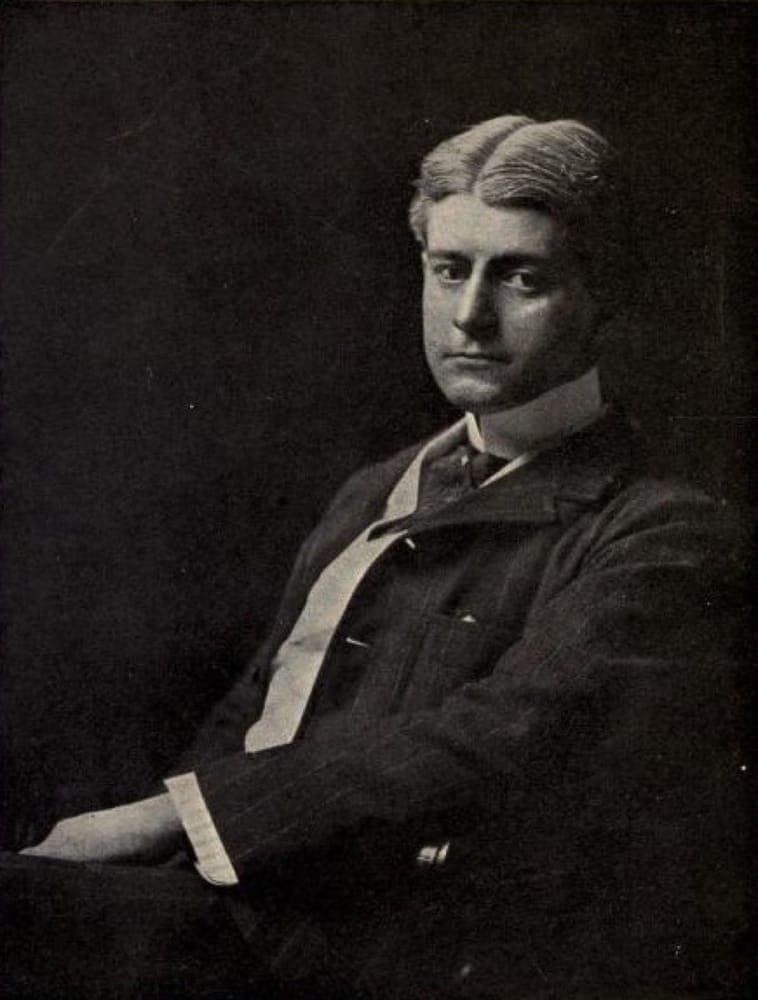
Author
Frank Norris
- Lived
- Lived 1870 to 1902
- From
- From American
Born Benjamin Franklin Norris Jr. on March 5, 1870, in Chicago, he was the son of a self-made jewelry wholesaler and a former actress who read Dickens and Scott aloud to him. The family moved to San Francisco when he was fourteen, and his father sent him to study painting in Paris, where the boy spent more time writing medieval romances than at the easel. He returned to enroll at the University of California, Berkeley, then at Harvard, where a writing instructor, Lewis Gates, encouraged the dark novel that became McTeague. Norris worked as a correspondent in South Africa during the Jameson Raid and in Cuba during the Spanish-American War, contracting fever in both. He fell hard for the French naturalism of Emile Zola, and set out to write what he called the novel of force, fiction that traced the brutal pull of heredity and environment on ordinary people. McTeague (1899), the story of a San Francisco dentist undone by greed, jealousy, and a winning lottery ticket, ends with two men handcuffed together in Death Valley beside a dead horse. He planned an ambitious trilogy on wheat, the Epic of the Wheat: The Octopus (1901), about California farmers crushed by the railroad, and The Pit (1903), about speculation on the Chicago Board of Trade. The third volume, The Wolf, was never written. As an editor at Doubleday he championed the unknown Theodore Dreiser, pressing the house to publish Sister Carrie. An earlier manuscript, Vandover and the Brute, appeared posthumously in 1914 after surviving the 1906 earthquake. Norris died of peritonitis following a ruptured appendix on October 25, 1902, in San Francisco, at the age of thirty-two.
The first button needs the app on this device; the second gets it there.
In the canon
- Mc Teague1899
- McTeague1899
- The Octopus1901
- The Pit1903