
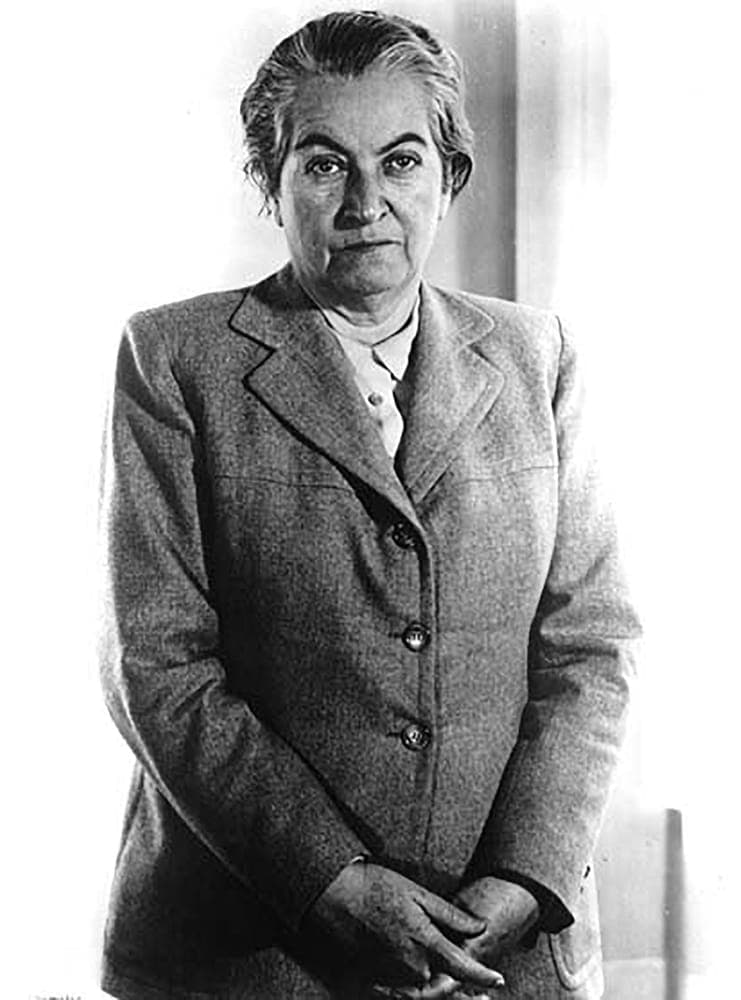
Author
Gabriela Mistral
- Lived
- Lived 1889 to 1957
- From
- From Chilean
- Born in
- Born in Vicuña, Chile
Born Lucila Godoy Alcayaga on April 7, 1889, in Vicuña, in Chile's arid Elqui Valley, she was raised largely by her mother and older half-sister after her father, an itinerant schoolteacher and poet, abandoned the family when she was three. Poverty kept her out of formal schooling for long stretches, and when she finally sought a teaching credential at sixteen, the local normal school turned her away, reportedly for holding unorthodox religious views; she taught anyway, without a diploma, working her way up through rural schoolhouses by force of will. In 1909 the man she loved, a railway clerk named Romelio Ureta, took his own life over an unpaid debt, and out of that grief she wrote the three sonnets that won Chile's Juegos Florales in 1914 under a new name, Gabriela Mistral, borrowed from two poets she admired and adopted to shield her teaching post from scandal. She rose to direct girls' schools across Chile, in Temuco lending Russian novels to a bookish teenager named Neftalí Reyes, the future Pablo Neruda, and in 1922 traveled to Mexico at the invitation of the education reformer José Vasconcelos to help design rural schools and libraries. That same year, Desolación, her first collection, was published in New York, its sorrow over lost love and lost children announcing a major voice in Spanish American poetry. She spent the rest of her life as a Chilean consul, posted to Naples, Madrid, Lisbon, and finally the United States, publishing Tala (1938), whose royalties she donated entirely to children displaced by the Spanish Civil War, and Lagar (1954), written in the shadow of the 1943 suicide of Juan Miguel Godoy, the nephew she had raised as her own son. In 1945 she became the first Latin American writer to win the Nobel Prize in Literature. She died of pancreatic cancer on January 10, 1957, in Hempstead, New York, and in 1961 her remains were moved to Montegrande, the Elqui Valley village of her childhood, as she had asked.
In 1909 the railway clerk she loved, Romelio Ureta, shot himself over a debt he could not repay. Among his belongings searchers found a postcard signed with her real name, Lucila Godoy. She was twenty, still an unlicensed country schoolteacher, and out of that private grief she wrote the three sonnets that would make her famous under another name entirely.
The first button needs the app on this device; the second gets it there.
In the canon
- Desolación1922