
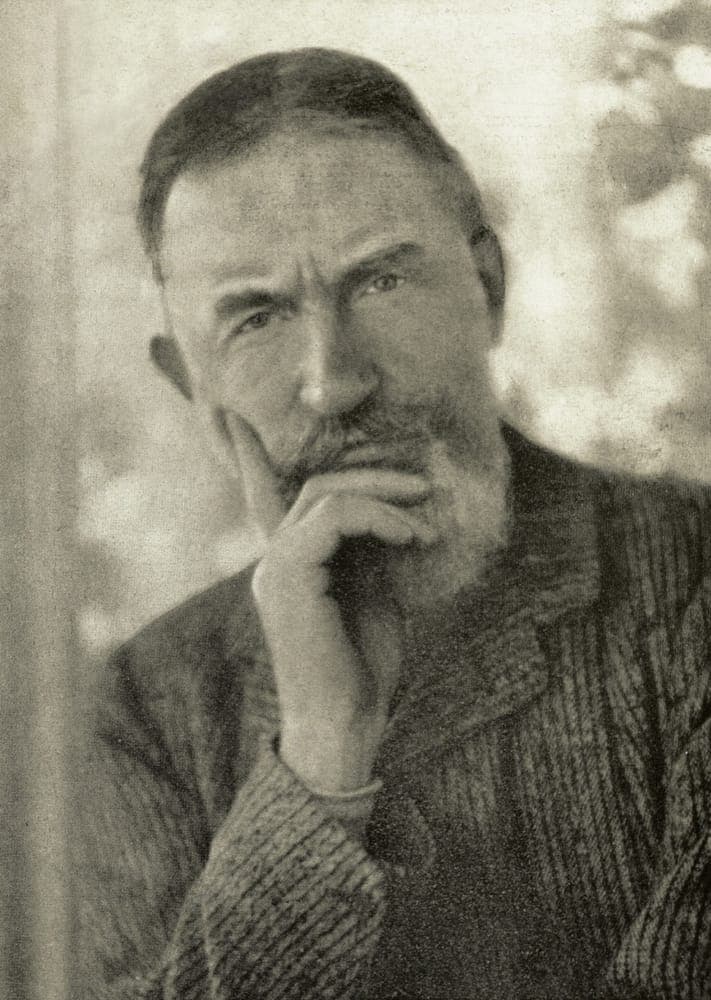
Author
George Bernard Shaw
- Lived
- Lived 1856 to 1950
- From
- From Irish
Born George Bernard Shaw on July 26, 1856, in Dublin, into a genteel but impoverished Protestant family, he grew up with a drunken father and a mother who left for London to teach singing. Largely self-educated, he loathed formal schooling and quit at fifteen to work as a clerk in a land agency. In 1876 he followed his mother to London, where he spent nine years writing five novels that publishers refused, surviving on her income and reading in the British Museum. He turned to journalism as a music and theatre critic, joined the Fabian Society in 1884, and became a tireless socialist lecturer. His plays carried that conviction onto the stage. Mrs Warren's Profession (1893) was banned for confronting prostitution; Arms and the Man (1894) mocked military glory; Man and Superman (1903) folded philosophy into comedy. Pygmalion (1913), the story of a phonetics professor who remakes a flower girl, became his most popular work and the basis for the musical My Fair Lady. Saint Joan (1923) followed the trial of Joan of Arc. A lifelong vegetarian and contrarian, he campaigned for spelling reform and once quipped that England and America were two countries separated by a common language. He won the Nobel Prize in Literature in 1925, accepting the honour but declining the money, and in 1938 received an Academy Award for the Pygmalion screenplay, the only person to hold both. He died on November 2, 1950, at his home in Ayot St Lawrence, Hertfordshire, aged ninety-four, of injuries from a fall while pruning a tree in his garden.
The first button needs the app on this device; the second gets it there.
In the canon
- The Devil's Disciple1897
- Plays Unpleasant: (Widowers' Houses, The Philanderer and Mrs. Warren's Profession)1898
- Candida1898
- Caesar and Cleopatra1901
- Captain Brassbound's Conversion1901
- Man And Superman1903
- Major Barbara1905
- Pygmalion1913
- Heartbreak House1919
- Saint Joan1923
- Selected Plays of George Bernard Shaw1976