
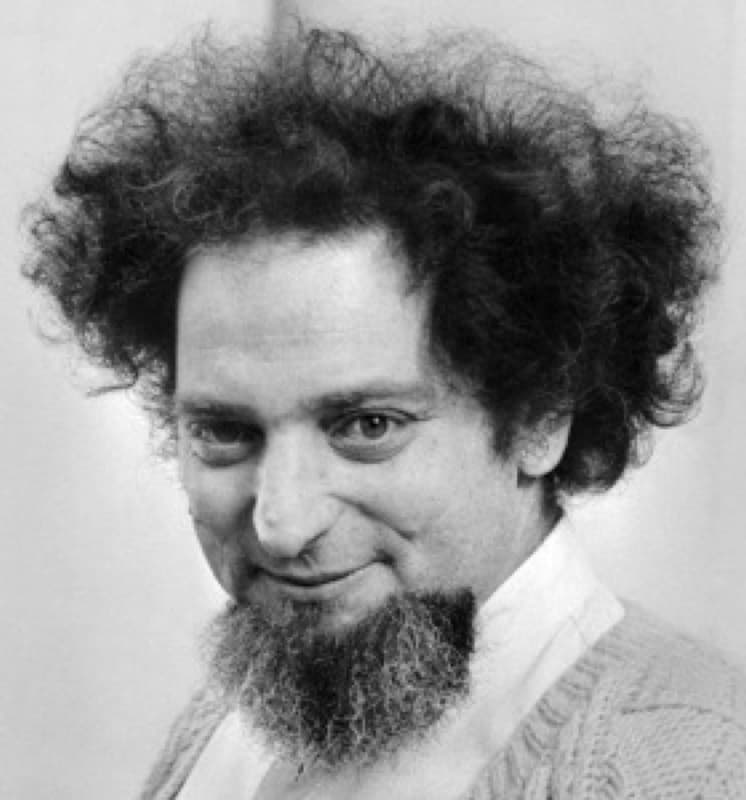
Author
Georges Perec
- Lived
- Lived 1936 to 1982
- From
- From French
- Born in
- Born in Paris, France
Born on March 7, 1936, in Paris, the only child of Icek Judko Peretz and Cyrla Szulewicz, Polish Jews who had emigrated to France in the 1920s and gallicized their names to André and Cécile Perec. His father enlisted in the French Army at the outbreak of the Second World War and died in 1940 from wounds sustained in combat. His mother was deported and almost certainly murdered at Auschwitz in 1943. Perec, then six, was smuggled to safety in the village of Villard-de-Lans in the Alps, hidden in a Catholic boarding school for the duration of the occupation. After the Liberation he was raised in Paris by his paternal aunt and uncle, who formally adopted him in 1945. Absence, loss, and the precariousness of identity became the obsessions that drove his writing. In 1965 he published Things: A Story of the Sixties, a coolly observed novel of consumer desire that won the Prix Renaudot. In 1967 he joined the Oulipo, the Workshop for Potential Literature, a group devoted to writing under formal constraints, and found in its methods a home for his combinatorial imagination. La Disparition (1969), translated as A Void, is an entire novel written without the letter e, a lipogram whose missing vowel enacts, at the level of language itself, the disappearance at the center of his life. W, or the Memory of Childhood (1975) interweaves a fictional dystopia with fragments of autobiography that circle the void left by his parents. Life: A User's Manual (1978), a dazzling encyclopedic novel structured around the rooms of a Parisian apartment building, is widely considered his masterpiece. He died of lung cancer on March 3, 1982, four days before his forty-sixth birthday.
In the spring of 1942, his mother Cyrla walked six-year-old Perec to the Gare de Lyon in Paris and placed him on a Red Cross convoy bound for the free zone. Neither of them knew it was the last time they would see each other. She was arrested the following winter and deported to Auschwitz.
The first button needs the app on this device; the second gets it there.
In the canon
- Things1965
- A Void1969
- Species of Spaces1974
- W, or the Memory of Childhood1975
- An Attempt at Exhausting a Place in Paris1975
- Life: A User's Manual1978
- I Remember1978
- Ellis Island1980