
Author
Gerard Manley Hopkins
- Lived
- Lived 1844 to 1889
- From
- From English
- Born in
- Born in Stratford, Essex, England
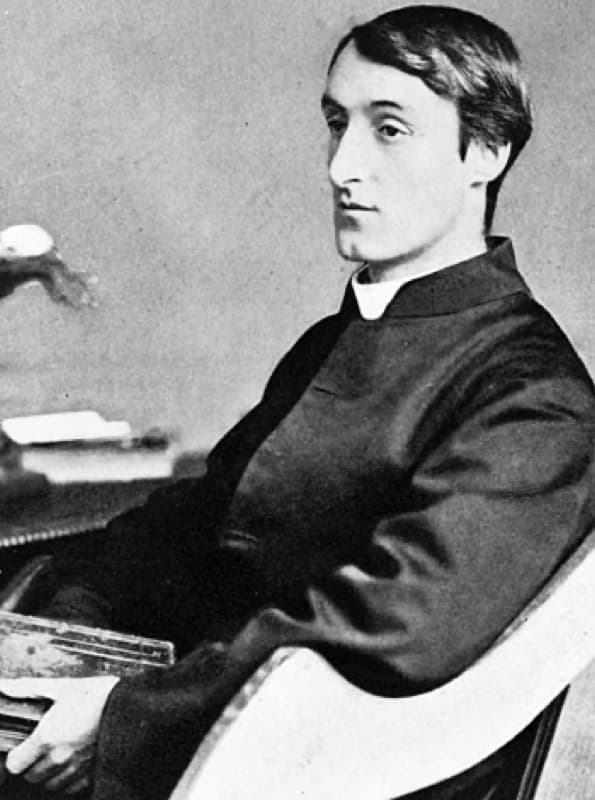
Born on July 28, 1844, in Stratford, Essex, now part of Greater London, Gerard Manley Hopkins was the eldest of probably nine children born to Manley Hopkins, a marine insurance adjuster and sometime poet, and Catherine Smith Hopkins. He was educated at Highgate School and won an exhibition to Balliol College, Oxford, where he studied Classics under Benjamin Jowett and Walter Pater. At Oxford he fell under the influence of the Tractarian movement, and in 1866, at twenty-two, he was received into the Catholic Church by John Henry Newman. Two years later he entered the Society of Jesus. Believing that poetry was a vanity incompatible with religious life, he burned his early verses and wrote almost nothing for seven years. Then, in December 1875, five Franciscan nuns exiled from Germany drowned when the SS Deutschland sank in the Thames estuary, and his Jesuit superiors encouraged him to write about it. The result was "The Wreck of the Deutschland," a long ode whose rhythmic innovations, what Hopkins called "sprung rhythm," a prosody based on stressed syllables rather than regular metrical feet, baffled every editor who saw it. Over the following years he composed some of the most extraordinary poems in the English language: "God's Grandeur," "The Windhover," "Pied Beauty," "Felix Randal", none of them published in his lifetime. Ordained in 1877, he served as priest and teacher in London, Oxford, Liverpool, and Glasgow. In 1884 he was appointed professor of Greek and Latin at University College Dublin, where isolation, overwork, and spiritual desolation produced the so-called "terrible sonnets," poems of anguished faith wrung from what he called "a winter world." He died of typhoid fever in Dublin on June 8, 1889, at forty-four. His friend Robert Bridges finally published his poems in 1918, nearly thirty years after his death.
In the Welsh hills near St Beuno's College, Hopkins watched a kestrel ride the wind, hanging motionless against a gust before dropping into its stoop. He turned the sight into The Windhover, the sonnet he later called the best thing he ever wrote, its stressed syllables straining to mimic the bird's own effort.
I am so happy, I am so happy.
The first button needs the app on this device; the second gets it there.
In the canon
- The Wreck of the Deutschland1876
- The Windhover1877
- Pied Beauty1877
- God's Grandeur1877
- Poems and Prose1918