
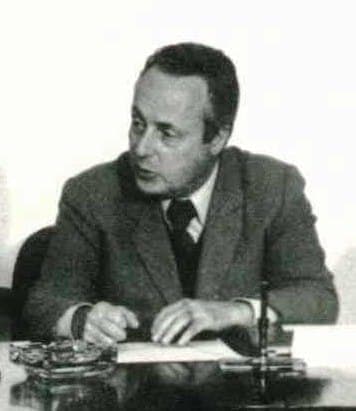
Author
Giorgio Bassani
- Lived
- Lived 1916 to 2000
- From
- From Italian
- Born in
- Born in Bologna, Italy
Born in Bologna on 4 March 1916 to a prosperous Jewish family of Ferrara, Giorgio Bassani was the eldest child of Enrico Bassani, a doctor, and Dora Minerbi, and grew up in the Emilian city he would later make the setting of nearly everything he wrote. He thought he would be a concert pianist before literature pulled him away. At the University of Bologna he studied art history under Roberto Longhi and wrote his thesis on the nineteenth-century lexicographer Niccolo Tommaseo, graduating in 1939 despite the racial laws of 1938. As a Jew he could only teach in the Jewish school of Ferrara on Via Vignatagliata; his first book, A City on the Plain (1940), appeared under the pseudonym Giacomo Marchi to evade the laws. He joined the anti-fascist resistance, was arrested in May 1943, and released on 26 July, the day after Mussolini fell. A week later he married Valeria Sinigallia, whom he had met playing tennis. As editorial director at Feltrinelli in 1958 he rescued Giuseppe Tomasi di Lampedusa's The Leopard from rejection elsewhere and saw it into print posthumously. His Cinque storie ferraresi won the Strega in 1956, and The Garden of the Finzi-Continis (1962), the story of an aristocratic Jewish family of Ferrara closing the gates of its garden as the racial laws tighten, won the Viareggio and became Vittorio De Sica's Oscar-winning 1970 film. From 1965 to 1980 he served as president of Italia Nostra, Italy's leading heritage and landscape protection society. He died in Rome on 13 April 2000, aged eighty-four, and was buried in the Jewish Cemetery of Ferrara among the graves where he had located the family Finzi-Contini.
In May 1943 Bassani was locked in the prison on Via Piangipane in Ferrara for his anti-fascist work. His letters home thanked the family for their parcels: food, clean clothes, and Dante, Tolstoy and Manzoni. He walked out on 26 July. The same building now houses Italy's national museum of Italian Judaism and the Shoah.
The first button needs the app on this device; the second gets it there.
In the canon
- The Garden of the Finzi-Continis1962