
Author
Guillaume Apollinaire
- Lived
- Lived 1880 to 1918
- From
- From Polish-French
- Born in
- Born in Rome, Italy
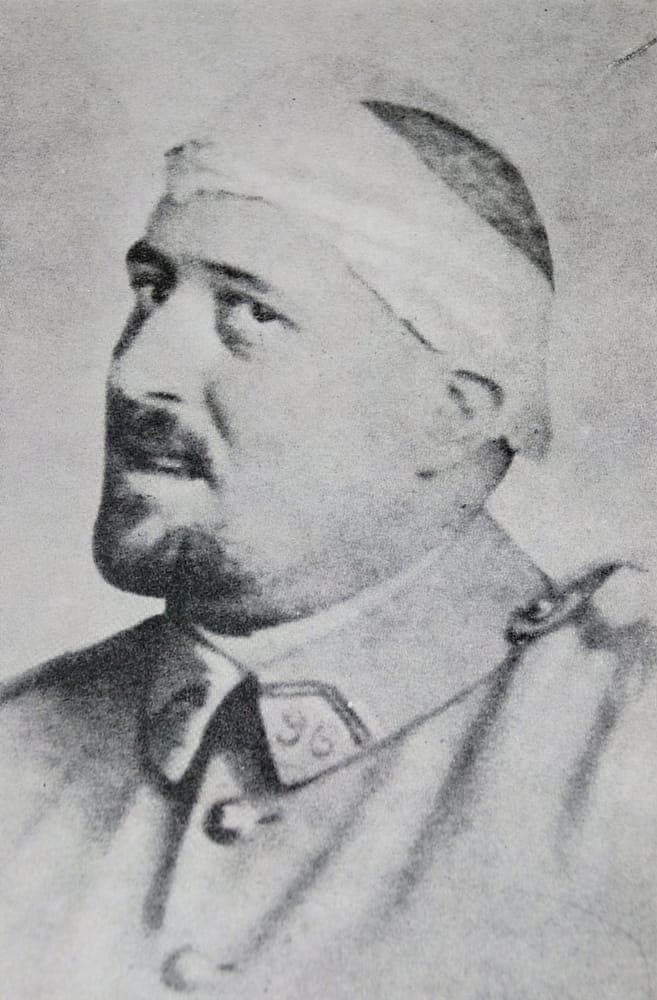
Born Wilhelm Albert Włodzimierz Apolinary Kostrowicki on August 26, 1880, in Rome, the illegitimate son of a Polish-Lithuanian noblewoman, Angelika Kostrowicka, and an absent father most likely a Graubünden aristocrat, Guillaume Apollinaire grew up speaking French, Italian, and Polish. He moved to Paris at twenty and changed his name. Within a few years he was at the centre of the Montmartre and Montparnasse avant-garde, friend and champion of Picasso, Henri Rousseau, Marie Laurencin, who was his lover and muse, Braque, Derain, Chagall, Duchamp, Modigliani, Cocteau, and Satie. He coined the term Cubism in 1911 to describe the new painting and the term Surrealism in 1917 to describe a Cocteau and Satie ballet, three years before the movement that took the name. In September 1911 he was arrested and jailed for a week on suspicion of having received the stolen Mona Lisa from a friend, and he in turn implicated Picasso. Alcools (1913), his first major collection, abandoned punctuation entirely and married Symbolist longing to a modern urban tenderness. Calligrammes (1918) shaped its poems on the page as fountains, hearts, falling rain, and the Eiffel Tower. He enlisted in 1914, served as an infantry officer, was wounded in the temple by shrapnel in 1916, and trepanned. He coined the word Surrealism while recovering from this wound. Two years later, on November 9, 1918, weakened by the wound and lying in his Paris apartment, he died of influenza in the Spanish flu pandemic, two days before the Armistice. He was thirty-eight. The French government declared him Mort pour la France for his war service, and he was buried in Père Lachaise.
In September 1911, police arrested Apollinaire and jailed him at La Santé prison, suspecting him in the theft of the Mona Lisa after a former secretary confessed to stealing statuettes from the Louvre and selling one to Picasso. Under interrogation, Apollinaire named Picasso, who was brought in and questioned. Both were released without charge.
The first button needs the app on this device; the second gets it there.
In the canon
- Le Pont Mirabeau (The Mirabeau Bridge)1912
- Alcools1913
- Il Pleut (It's Raining)1916
- La Petite Auto1918
- Cœur Couronne et Miroir1918
- La Jolie Rousse1918
- Les Collines1918