
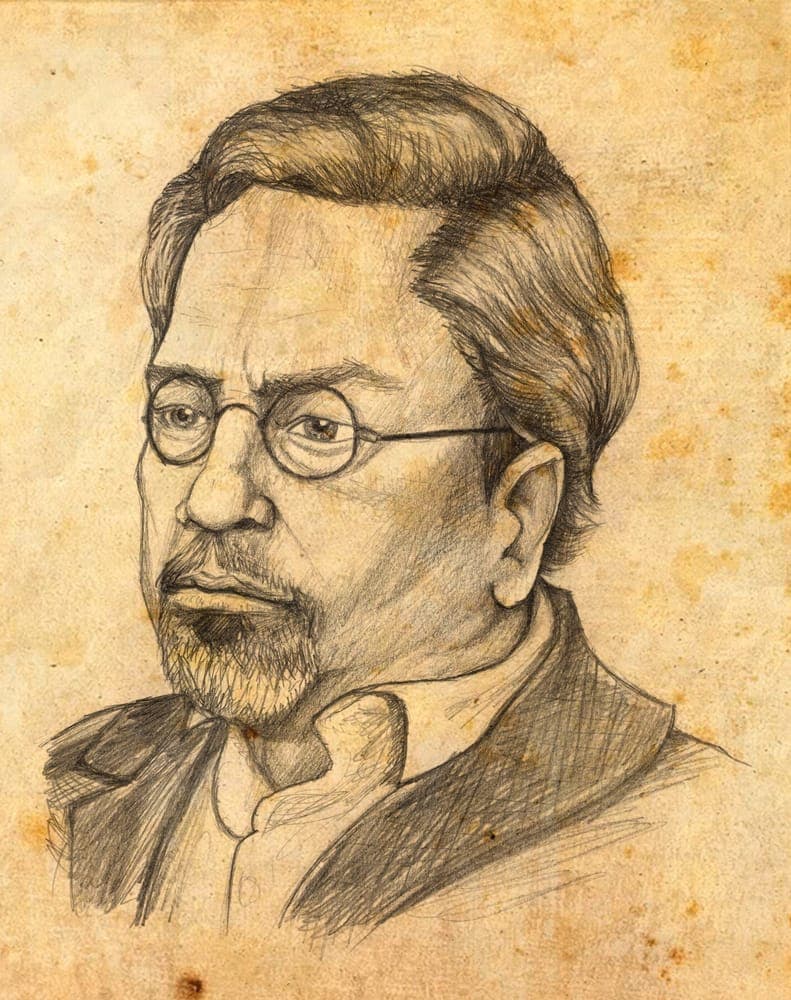
Author
Guillermo Cabrera Infante
- Lived
- Lived 1929 to 2005
- From
- From Cuban-British
- Born in
- Born in Gibara, Cuba
Born on April 22, 1929, in the small port town of Gibara in Cuba's Oriente province, Guillermo Cabrera Infante was the son of Guillermo Cabrera López and Zoila Infante, founding members of the Cuban Communist Party who were jailed and harassed for their politics under Fulgencio Batista. The family moved to Havana in 1941, where Cabrera Infante briefly studied medicine before abandoning it for journalism, writing film criticism for the weekly Carteles under the pun-pseudonym G. Caín, a compression of his own surnames into the Spanish word for Cain. After the 1959 revolution he edited Lunes de Revolución, the newspaper Revolución's literary supplement, until Fidel Castro shut it down in 1961 following the banning of a documentary about Havana nightlife that Cabrera Infante's brother had made; Castro's ultimatum to writers, 'Within the Revolution, everything! Against the Revolution, nothing!', effectively ended his career at home. Posted to Brussels as a cultural attaché from 1962, he returned to Havana in 1965 for his mother's funeral, was held by the security services for four months, and left Cuba for the last time that October. He settled first in Madrid, then in London, where he lived until his death and eventually took British citizenship. His novel Tres tristes tigres (1967, translated as Three Trapped Tigers) reimagined the voices and nightlife of prerevolutionary Havana through a torrent of puns and wordplay that invited comparison to James Joyce's Ulysses. He married the actress Miriam Gómez in 1961, wrote the screenplay for the film Vanishing Point (1971) under the name Guillermo Cain, and published Infante's Inferno (1979), A View of Dawn in the Tropics (1974), and the essay collection Mea Cuba (1992). In 1997 King Juan Carlos of Spain presented him with the Cervantes Prize. He died in London on February 21, 2005, at seventy-five, of septicemia following a fall that had fractured his hip.
In 1965 Cabrera Infante flew home to bury his mother, expecting to be back at his diplomatic post in Brussels within days. Instead Cuba's counterintelligence service held him for four months, refusing him permission to leave the island. When he finally boarded a flight out that October, he understood he would not see Cuba again.
The first button needs the app on this device; the second gets it there.
In the canon
- Three Trapped Tigers1965