
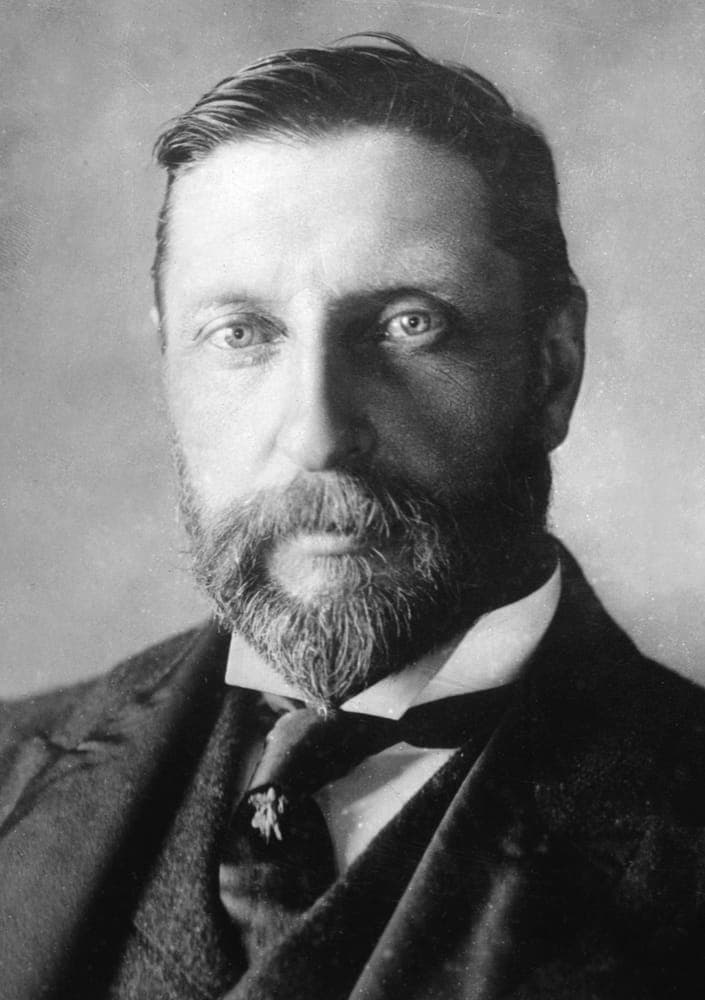
Author
H. Rider Haggard
- Lived
- Lived 1856 to 1925
- From
- From English
- Born in
- Born in Bradenham, Norfolk
Born Henry Rider Haggard on June 22, 1856, at Bradenham Hall in Norfolk, he was the eighth of ten children of a barrister and squire who thought him too dull for the professions and packed him off abroad rather than to university. Sent at nineteen to South Africa as secretary to the governor of Natal, he raised the Union Jack over the Transvaal in 1877 and worked in the colonial courts, absorbing the landscapes and Zulu history that would shape his fiction. He returned to England, married a Norfolk heiress, qualified as a barrister, and tried farming and law without success. A wager with his brother that he could not write a novel as good as Treasure Island produced King Solomon's Mines (1885), the tale of Allan Quatermain leading an expedition into the African interior in search of a lost diamond hoard. Its sale was a sensation, and the lost-world adventure became a genre almost overnight. She (1887), the story of the immortal queen Ayesha, "She-who-must-be-obeyed," reigning over a hidden African kingdom, sold in the tens of millions across the following century. He wrote dozens more romances, among them Allan Quatermain (1887), Cleopatra (1889), and Nada the Lily (1892), while also serving as a respected authority on agriculture and rural land reform, work for which he was knighted in 1912. He sat on royal commissions, toured the colonies surveying farm labour, and was a close friend of Rudyard Kipling, with whom he plotted stories aloud. He died on May 14, 1925, in London, following surgery, at the age of sixty-eight, his ashes interred in the church at Ditchingham.
In February 1886, midway through another novel, he set it aside to write She. He worked, by his own account, at white heat and almost without rest, finishing the manuscript in six weeks and later insisting it carried scarcely a correction, never rewritten from the first draft that flowed out of him that spring.
The first button needs the app on this device; the second gets it there.
In the canon
- King Solomon's Mines1885
- She1887