
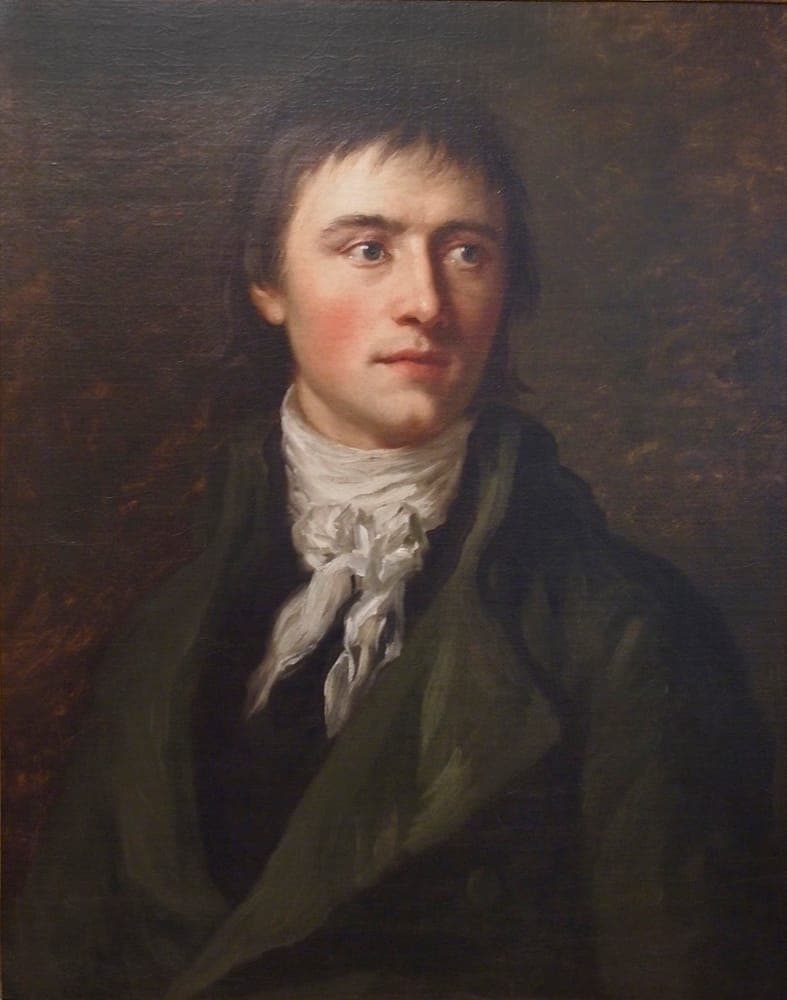
Author
Heinrich von Kleist
- Lived
- Lived 1777 to 1811
- From
- From German
Born Bernd Heinrich Wilhelm von Kleist on October 18, 1777, in Frankfurt an der Oder, Prussia, into a Junker family that had given the army many officers and few books. Orphaned young, he entered the Prussian military at the age of fourteen, fought in the Rhine Campaign against revolutionary France, and resigned his commission in 1799, calling the soldier's life a monument to tyranny. He turned to study at the university in his home town, then in 1801 read Kant and fell into the intellectual crisis that shaped him, convinced that truth was forever beyond human reach. He wandered through Europe, was briefly imprisoned by the French as a suspected spy, and wrote with a ferocity rare in German letters. His novella Michael Kohlhaas (1810) follows a horse dealer whose lawful grievance hardens into apocalyptic vengeance. The Marquise of O (1808) and The Earthquake in Chile (1807) compress violence and grace into a few merciless pages. For the stage he wrote the comedy The Broken Jug (1808), the savage Penthesilea (1808), and Prince Friedrich of Homburg, published posthumously in 1821. His essay On the Marionette Theatre (1810) argues that grace returns only at the outer limits of consciousness. He ran a Berlin newspaper, the Berliner Abendblätter, which the censors soon closed. Poverty and a sense of failure hounded him. On November 21, 1811, on the shore of the Kleiner Wannsee near Potsdam, he shot Henriette Vogel, a terminally ill friend who had agreed to die with him, then shot himself. He was thirty-four. His letters from those final days are calm, almost joyful, the writing of a man who had at last arranged everything to his satisfaction.
The first button needs the app on this device; the second gets it there.
In the canon
- The Broken Jug1808
- The Marquise Of O1808
- Michael Kohlhaas1810