
Author
Henri Alain-Fournier
- Lived
- Lived 1886 to 1914
- From
- From French
- Born in
- Born in La Chapelle-d'Angillon, France
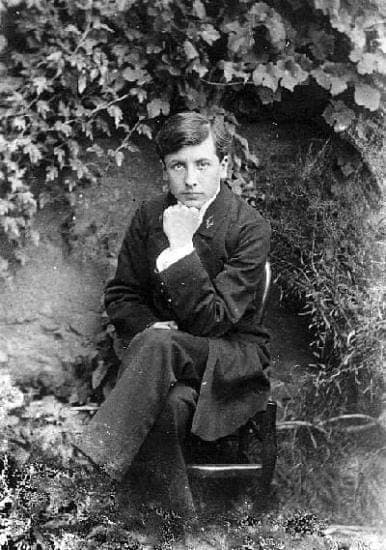
Born Henri-Alban Fournier on October 3, 1886, in La Chapelle-d'Angillon in the Cher département of central France, he was the son of two village schoolteachers, called "Henri" by everyone who knew him, and the elder brother of Isabelle, the closest and most constant reader of his life. Schooling at the Lycée Lakanal in Sceaux, near Paris, brought him in 1903 into the company of Jacques Rivière, a fellow boarder who became his confidant and, after marrying Isabelle in 1909, his brother-in-law. On June 1, 1905, walking along the Seine on a Whitsun afternoon, he glimpsed a young blonde woman, Yvonne de Quièvrecourt, and followed her through the streets and aboard a riverboat; ten days later he spoke to her once at length, learned she was engaged, and never saw her again in person. The encounter shaped his life and his book. He failed his entrance exam to the École Normale Supérieure in 1907, performed two years of military service, drifted through literary journalism for the Paris-Journal, where he met André Gide and Paul Claudel, and, working in fits of conviction at his small desk near the Luxembourg Gardens, completed Le Grand Meaulnes, his single novel, in 1913. Published that year as The Lost Estate, it was narrowly defeated for the Prix Goncourt by Marc Elder's Le peuple de la mer, an outcome French critics still mourn. He volunteered at the outbreak of war in August 1914 as a lieutenant of infantry. He was killed on September 22, 1914, in the woods of Saint-Remy-la-Calonne near Verdun, aged twenty-seven, his body unidentified until 1991, when a French archaeologist excavated a mass grave and recovered him among twenty fallen comrades.
On June 1, 1905, an eighteen-year-old Fournier left an exhibition at the Grand Palais and saw a tall, fair-haired young woman crossing the Cours-la-Reine. He followed her onto a riverboat, spoke to her only once, ten days later, and learned she was already engaged. He never saw her again. He spent the rest of his life writing toward her.
The first button needs the app on this device; the second gets it there.
In the canon
- The Lost Estate1913