
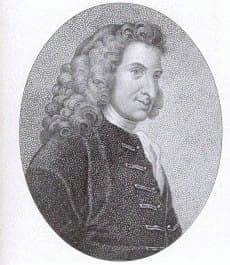
Author
Henry Fielding
- Lived
- Lived 1707 to 1754
- From
- From British
- Born in
- Born in Sharpham Park, Somerset, England
Born Henry Fielding on April 22, 1707, at Sharpham Park in Somerset, the seat of his mother's family, he was the eldest child of Lieutenant General Edmund Fielding, a charming and irresponsible officer descended from the Earls of Denbigh, and Sarah Gould, a judge's daughter. His mother died when he was eleven, and a custody suit removed him from his father's chaotic household into his grandmother's care. He was educated at Eton, where he formed a lifelong friendship with William Pitt the Elder, and at the University of Leiden, where he read classics and law until poverty drove him back to London in 1729. He turned to the stage, writing more than two dozen satirical plays in the next eight years, including The Author's Farce (1730) and the burlesque The Tragedy of Tragedies (1731). His political satires on Robert Walpole's government were instrumental in provoking the Licensing Act of 1737, which closed most of the London theatres and ended his playwriting career overnight. He read law at the Middle Temple, was called to the bar in 1740, and made his living as a circuit barrister and a pamphleteer. Shamela (1741) and Joseph Andrews (1742) began as parodies of Samuel Richardson's Pamela and grew into the comic English novel as he was inventing it. Tom Jones (1749), the picaresque history of a foundling working his way toward Sophia Western, is the first great novel of its kind in English. Amelia (1751) followed. Appointed magistrate at Bow Street in 1748, he founded the Bow Street Runners, London's first professional police force, and worked himself to ruin pursuing thieves and gin sellers. He sailed to Lisbon for his health in 1754 and died there on October 8, at forty-seven.
On 26 June 1754, dying of dropsy and unable to walk, Fielding left Fordhook for the ship to Lisbon. The quarter-mile passage from coach to vessel exhausted him more than a twelve-mile land journey, and he was hoisted aboard in a chair rigged with pulleys, presenting, he wrote, a spectacle of the highest horror.
The first button needs the app on this device; the second gets it there.
In the canon
- Joseph Andrews1742
- Tom Jones1749
- Amelia1751