
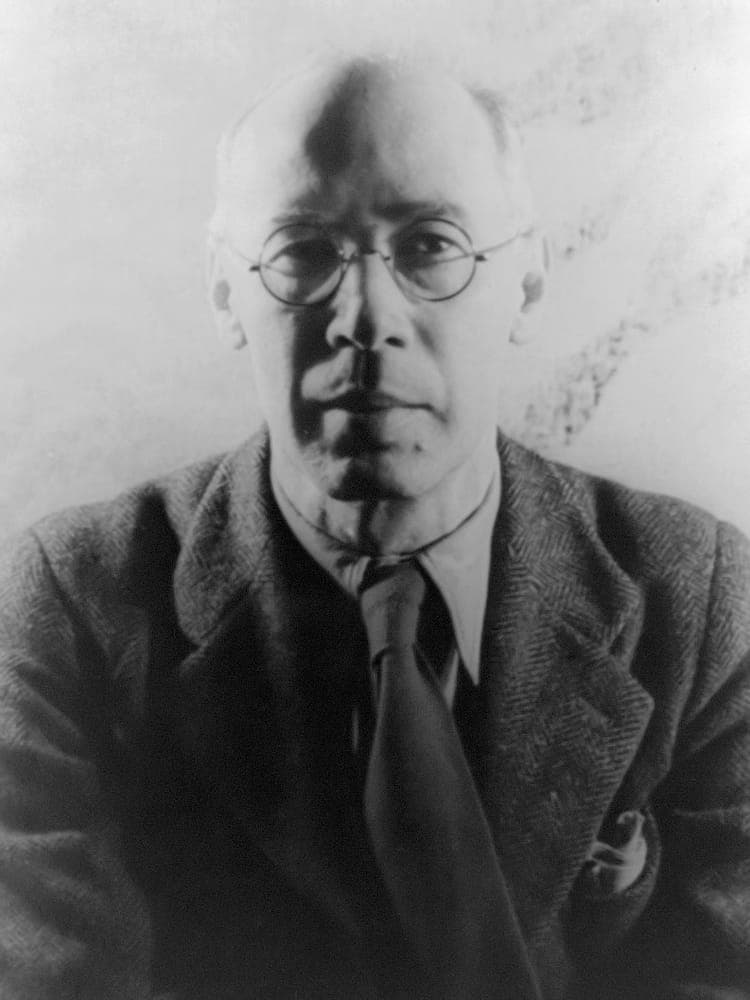
Author
Henry Miller
- Lived
- Lived 1891 to 1980
- From
- From American
- Born in
- Born in Yorkville, Manhattan
Born Henry Valentine Miller on December 26, 1891, in the Yorkville section of Manhattan, the son of Lutheran German parents, his father a tailor with a drinking problem, he spent his childhood at 662 Driggs Avenue in Williamsburg, Brooklyn, in what he called the Fourteenth Ward and remembered as the only paradise he ever knew. He attended City College for a single semester, then took a series of jobs that became fictional material: a personnel manager hiring messengers for Western Union, a teacher of English to immigrants, a tailor in his father's shop. In 1930, at thirty-eight, broke and recently divorced from his second wife June, he sailed for Paris with ten dollars in his pocket and lived on the kindness of friends; one of them, Anaïs Nin, became his lover and paid for the first printing of Tropic of Cancer in 1934. The novel was banned in the United States as obscene for the next twenty-seven years; the 1964 Supreme Court ruling that overturned the ban became a landmark of American free-speech law. Black Spring (1936) and Tropic of Capricorn (1939) followed, then the long autobiographical trilogy The Rosy Crucifixion: Sexus (1949), Plexus (1953), and Nexus (1959). When the war forced him out of Europe he settled in Big Sur in 1944 and stayed for seventeen years, writing watercolours and a beautiful elegiac portrait of the California coast in Big Sur and the Oranges of Hieronymus Bosch (1957). He moved to Pacific Palisades in 1963, married five times in all, and held dinner parties where George Plimpton and Anaïs Nin came to listen. He died on June 7, 1980, in Pacific Palisades, California, at the age of eighty-eight, of circulatory complications.
In 1930, broke and freshly divorced from his second wife, June, Miller sailed for Paris with ten dollars in his pocket and no plan to return. He slept on friends' floors and lived off borrowed meals and quiet charity, certain, he later insisted, that he had never been happier in his life.
The first button needs the app on this device; the second gets it there.
In the canon
- Tropic of Cancer1934
- The Rosy Crucifixion1949