
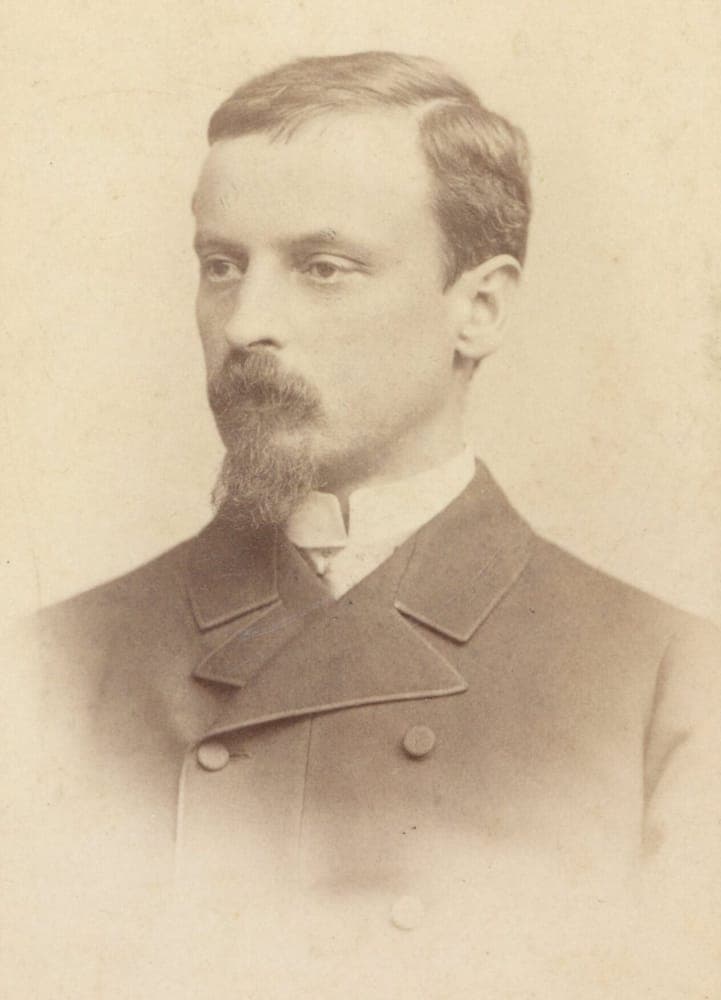
Author
Henryk Sienkiewicz
- Lived
- Lived 1846 to 1916
- From
- From Polish
Born on May 5, 1846, in the village of Wola Okrzejska in the Lublin Governorate of Russian Poland, Henryk Adam Aleksander Pius Sienkiewicz came from impoverished gentry whose paternal line descended from Lipka Tatars settled in the old Grand Duchy of Lithuania. His older brother Kazimierz died in the January Uprising of 1863. The family moved to Warsaw, where Henryk studied medicine, then law, then philology at the Imperial University, leaving in 1871 without a diploma after failing his Greek examination. He began writing for newspapers under the pen name Litwos. In 1876 he sailed to the United States with the actress Helena Modrzejewska and her husband, financing the trip by sending back travel essays, and tried briefly to establish a Polish utopian commune at Anaheim, California. The dispatches made him famous at home. Returning to Europe, he produced the Trilogy set in the seventeenth-century Polish-Lithuanian Commonwealth, With Fire and Sword (1884), The Deluge (1886), and Sir Michael (1888), serialised to vast audiences hungry for a vision of Polish heroism while their nation lay partitioned among empires. Quo Vadis, set in Nero's Rome and serialised from 1895 to 1896, sold across the world in dozens of languages and three Hollywood adaptations would follow. The Knights of the Cross (1900) returned to medieval Poland. In 1905 the Swedish Academy awarded him the Nobel Prize in Literature for his outstanding merits as an epic writer. During the First World War he organised relief for Polish victims from Vevey in Switzerland, where he died on November 15, 1916, at seventy. His remains were returned to a free Poland in 1924 and reinterred in the crypt of Saint John's Cathedral in Warsaw.
The first button needs the app on this device; the second gets it there.
In the canon
- Quo Vadis1895