
Author
Homer
- Lived
- Lived 800 BCE to 701 BCE
- From
- From Ancient Greek
- Born in
- Born in Smyrna, Ionia
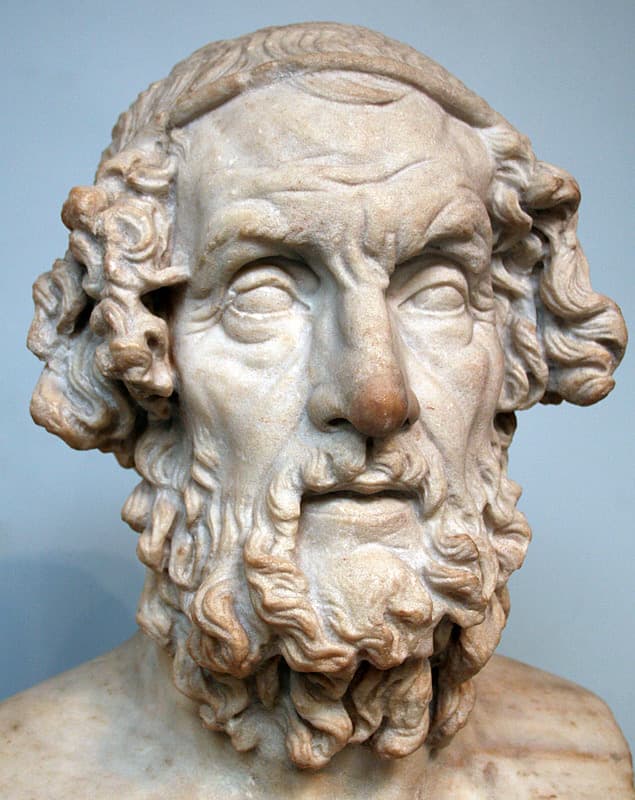
Nothing certain is known about Homer, and that uncertainty is itself the most important fact about him. The ancient Greeks believed he was a blind bard from Ionia, the western coast of Anatolia and the nearby islands, and the cities of Smyrna and Chios both claimed him as their own. The poet Pindar credited both places; a guild of performers on Chios called themselves the Homeridae, the children of Homer, as early as the sixth century BC. Modern scholars place the composition of his two great epics, the Iliad and the Odyssey, somewhere in the late eighth or early seventh century BC, a period when the long tradition of oral poetry was first being committed to writing. The Iliad tells of a quarrel between Achilles and Agamemnon during the final year of the Trojan War; the Odyssey follows the ten-year journey of Odysseus back to Ithaca. Together they provided the foundation of Greek education, culture, and moral instruction for centuries. The Greeks knew much of both poems by heart and valued them as a symbol of Hellenic unity and heroism. Whether one poet composed both works or two separate minds shaped them, the so-called Homeric Question, debated since antiquity, remains unresolved. Plato said Homer "taught Greece." Dante called him the sovereign poet. Alexander Pope acknowledged him as the greatest of all poets. The word Homeros may itself mean "blind," and the Odyssey features a blind bard named Demodocus who sings before a royal court, a detail that has struck readers for millennia as a self-portrait embedded in the work.
In the Hymn to Apollo, later cited by Thucydides as proof of Homer's authorship, the poet has Delian island maidens promise that whenever a stranger asks who sings the sweetest songs, they will answer with one voice: 'He is a blind man, and dwells in rocky Chios: his lays are evermore supreme.'
The first button needs the app on this device; the second gets it there.
In the canon
- The Odyssey750 BCE
- The Iliad750 BCE
- Homeric Hymns650 BCE
- Hymn to Demeter650 BCE