
Author
Horace Walpole
- Lived
- Lived 1717 to 1797
- From
- From British
- Born in
- Born in Arlington Street, London
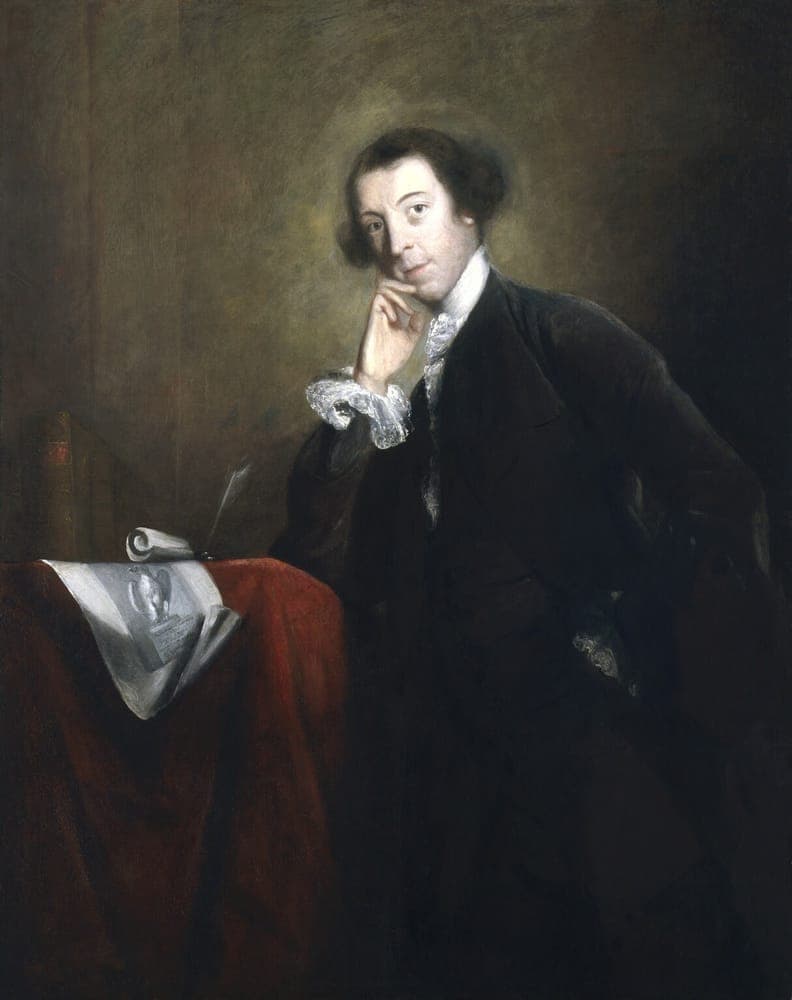
Born Horatio Walpole on 24 September 1717 in London, he was the youngest son of Sir Robert Walpole, Britain's first prime minister, and Catherine Shorter; his mother's death in 1737 was, by his own account, the most powerful emotion of his entire life. Educated at Eton, where he formed his Quadruple Alliance with the poet Thomas Gray, Richard West, and Thomas Ashton, then at King's College, Cambridge, he left without taking a degree and undertook the Grand Tour with Gray in 1739 to 1741, the friendship souring in Italy in a furious argument the cause of which neither would ever name. His father secured him three sinecures yielding over three thousand pounds a year for life, leaving him free to write and collect. In 1749 he began building Strawberry Hill, his Gothic villa in Twickenham overlooking the Thames, single-handedly reviving the Gothic style decades before the Victorians took it up. In a single mid-1764 burst he wrote The Castle of Otranto, claiming the plot came to him in a dream of a gigantic armoured hand on a staircase; published as a translation from an old Italian manuscript, it founded the Gothic novel. His Anecdotes of Painting in England (1762) opened the field of English art history; his tragedy The Mysterious Mother (1768) handled an incest plot too shocking for the public stage; and his Letters, running to forty-eight Yale volumes, remain the great social chronicle of Georgian England. Coined the word serendipity in a 1754 letter to Horace Mann. Never marrying, he succeeded as fourth Earl of Orford in 1791 on the death of his nephew. He died at Berkeley Square, London, on 2 March 1797, aged seventy-nine.
One morning in June 1764, Horace Walpole woke from a dream: he stood in an ancient castle and saw on the topmost banister of a great staircase a gigantic hand in armour. That evening he sat down and began writing, not knowing what he meant to say. Within two months, The Castle of Otranto was finished.
The first button needs the app on this device; the second gets it there.
In the canon
- The Castle of Otranto1764