
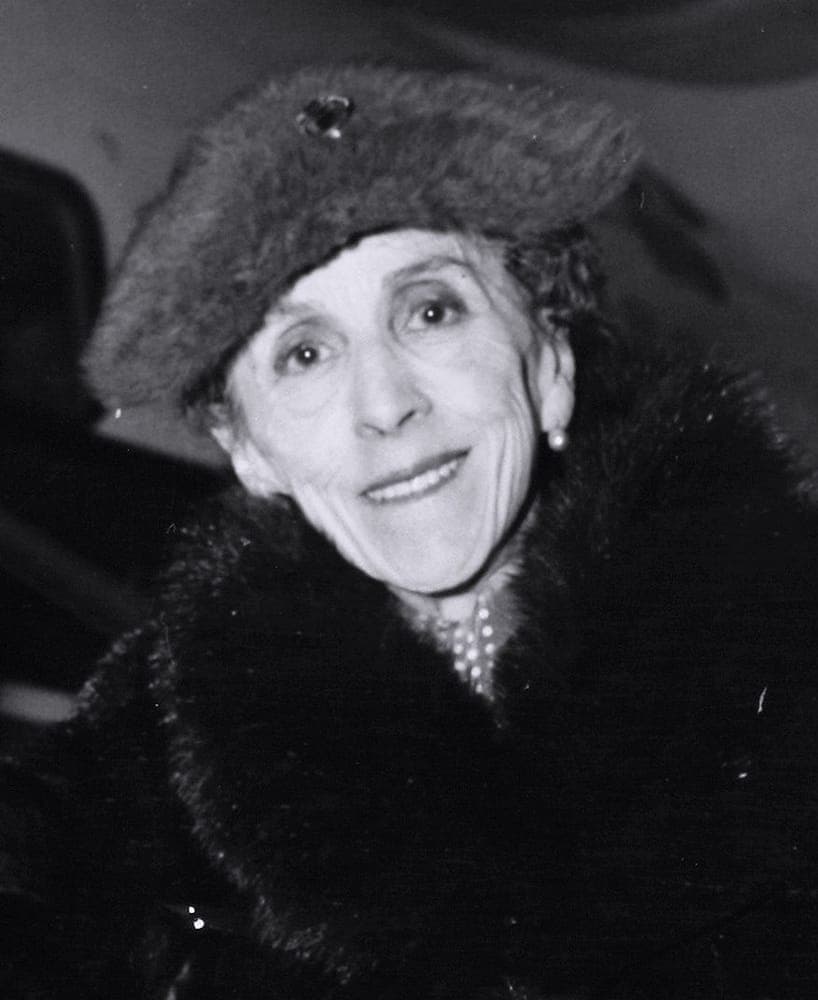
Author
Isak Dinesen
- Lived
- Lived 1885 to 1962
- From
- From Danish
- Born in
- Born in Rungsted, Denmark
Born Karen Christentze Dinesen on April 17, 1885, at Rungstedlund on the coast north of Copenhagen, she was the second of five children of Wilhelm Dinesen, a writer and former soldier of the Second Schleswig War, and Ingeborg Westenholz, the daughter of a Unitarian Copenhagen shipping family. Her father, who had once lived among the Chippewa in Wisconsin, hanged himself when she was nine, leaving her to the stern Unitarian household of her aunts and grandmother. She studied painting at the Royal Danish Academy of Fine Arts and in Paris, fell in love with her second cousin Hans von Blixen-Finecke, and, rebuffed, accepted his twin brother Bror instead. In 1914 they sailed for Kenya to run a coffee farm in the Ngong Hills outside Nairobi. Bror gave her syphilis on the wedding night, the marriage failed by 1925, and the farm itself failed in 1931, but the years between gave her the great love affair of her life with the English big-game hunter Denys Finch Hatton, killed when his Gipsy Moth crashed near Voi. She returned to Denmark at forty-six with nothing and began to write in English under the pen name Isak Dinesen, Isak meaning the one who laughs. Seven Gothic Tales (1934) found an American publisher first, then Out of Africa (1937), her elegiac memoir of the lost farm, which Hemingway later said deserved the Nobel more than his own. Winter's Tales (1942) and Anecdotes of Destiny (1958) followed. She was twice considered for the Nobel and twice passed over. She died on September 7, 1962, at Rungstedlund, aged seventy-seven, weighing under eighty pounds.
In February 1959, seventy-three and eating almost nothing, she crossed the Atlantic for the first time and asked to meet two Americans. Carson McCullers laid on oysters, grapes, champagne and a souffle at her house above the Hudson, and sat her down beside Marilyn Monroe.
The first button needs the app on this device; the second gets it there.
In the canon
- The Deluge at Norderney1934
- Out of Africa1937
- Sorrow-Acre1942
- Anecdotes of Destiny1958